English
 中文简体
Twill is one of those fabrics people recognize before they can name it. Run your thumb across the surface, feel a faint diagonal ridge, and the cloth seems to settle into your hand rather than slide away. That small tactile clue explains a lot about how twill feels: smooth but not slick, structured but not stiff, and often a little more substantial than a plain-weave fabric of the same weight.
What Twill Feels Like in the Hand
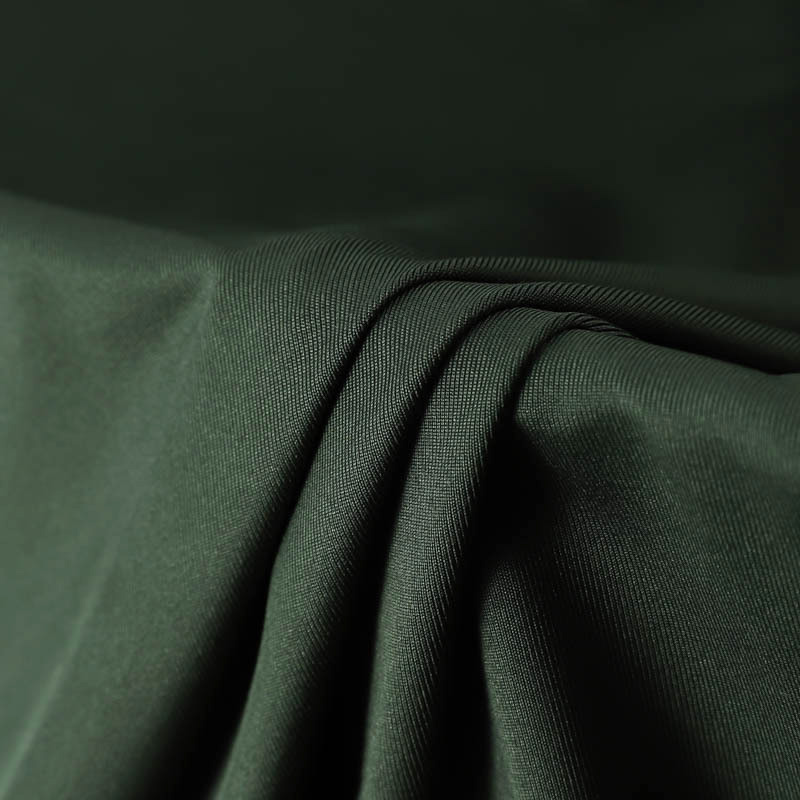
The first sensation is usually smoothness with a dry, matte character. Twill’s diagonal floats carry more yarn on the surface, so the cloth can feel gently ribbed under the fingertips. The ridge is subtle. It is not like a rib knit’s pronounced vertical channels; it is a fine directional grain that changes how light moves across the cloth.
In the palm, twill often feels denser than plain weave. It has a reassuring weight, yet it can still fold and drape. Cotton twill feels broken-in after washing, like a favorite pair of chinos. Wool twill feels springy and warm. Silk or viscose twill feels cooler and more fluid, with a quiet luster. Polyester twill can feel smooth and resilient, though lower-quality versions may feel dry in a flat, papery way.
The back of a twill can feel different from the face. Because the diagonal pattern reverses, one side may be smoother or more lustrous, while the reverse is more matte. This is one reason twill is often used for trousers, jackets, and structured dresses where the inside matters.
Why Twill Feels Different from Plain Weave and Satin
Twill uses fewer interlacing points than plain weave. The yarns float over two or more yarns in a stepped pattern, creating the diagonal line. Fewer intersections give the cloth more room to move, so it drapes more fluidly and feels less boardy. At the same time, the floats give it strength and resistance to abrasion.
The practical result is that twill sits between plain weave and satin. Plain weave feels crisp and even; satin feels liquid and slick; twill feels smooth, dry, and controlled. Our guide to how knitted and woven fabrics differ in structure is a useful companion if you are comparing fabric families.
| Weave structure | First touch | Drape | Surface character |
|---|---|---|---|
| Plain weave | Crisp, even, sometimes papery when tightly woven | Moderate; holds shape | Matte and uniform |
| Twill | Smooth, dry, gently ribbed | Soft but controlled | Diagonal grain; subtle luster on the face |
| Satin | Slick, cool, liquid | Fluid and heavy | High luster; smooth front, dull back |
The Fiber Changes Everything
Cotton twill is probably the twill most people know. It feels matte and dry, slightly crisp when new, and softens with washing. Chino, denim, and gabardine all live in this family. The diagonal line is visible, and the hand is firm but flexible.
Wool twill feels warmer and springier. The surface may have a slight nap or a dry, worsted smoothness. Fine merino can feel gentle, while coarser wool may feel scratchy against sensitive skin.
Silk twill feels cool, fluid, and quietly lustrous. Viscose twill can mimic that softness at a lower cost, though it may shrink or lose shape in washing. Against skin, both feel smooth and slightly slippery rather than dry.
Polyester twill feels strong, smooth, and quick-drying. Fine filament polyester can feel silky; staple polyester can feel drier and more cotton-like. Breathability depends on yarn, density, and finish, so a tightly woven polyester twill may feel warm and clammy in humid weather.
Weight, Density, and Finish Matter as Much as the Weave
A lightweight cotton twill at 120 gsm feels almost shirt-like: cool, soft, and mobile. A 300 gsm wool twill feels substantial, warm, and protective. Density changes how firmly the diagonal stands up. A tightly woven twill can feel smooth and wind-resistant; a looser twill feels softer and more breathable.
Finishes can transform the hand. Brushing or peaching softens the surface and creates a fuzzy touch. Washing and tumble-drying break down stiffness. Calendering presses the diagonal flatter and adds sheen. Coating or resin can make twill feel stiff, dry, or slick. When someone says twill feels rough, they may be describing a heavily finished utility fabric rather than the weave itself.
Twill also has more give on the bias than on the straight grain. Hold a piece by two corners and it may stretch and twist slightly. That bias movement is why twill garments can feel more comfortable across the shoulders and hips than their weight suggests.
How Twill Feels on the Body
Against skin, twill usually feels smooth and dry rather than cool and slippery. It does not cling the way a lightweight knit can. The fabric has a little body, so it stands away from the body and creates clean lines. In trousers, this feels supportive; in jackets, it feels structured; in dresses, it can feel elegant but not fragile.
Breathability depends on fiber and weight. Cotton twill is comfortable in mild weather, but heavy cotton twill can feel warm in humid heat. Wool twill is insulating. Silk or viscose twill feels cooler. Polyester twill can feel clammy if the fabric is tightly woven and unventilated, though moisture-wicking finishes and open structures improve comfort.
In motion, twill feels predictable. It folds in soft, rounded creases rather than sharp papery lines. It recovers from wrinkling better than many plain-weave fabrics, especially wool and polyester blends. Cotton twill can still crease, but the creases tend to relax with steam or wear.
Common Misunderstandings About How Twill Feels
- Twill is not a fiber. It is a weave structure, so a twill can feel crisp, soft, warm, cool, rough, or silky depending on what it is made from.
- Twill is not always heavy. Lightweight twill shirting and dresses exist and feel quite airy.
- Twill is not the same as tweed. Tweed is a rough woolen cloth often woven in twill, but the two terms are not interchangeable.
- Twill is not always rough. Utility twill can be firm, but fine merino, silk, and viscose twills can feel smooth and gentle.
- The diagonal line does not always mean a strong texture. In fine twill, you may see the line more than you feel it.
If You Love the Feel of Twill but Need Knit Comfort
At Shaoxing Yihan Textile, we work mostly with knits, and customers often ask for a fabric that has the calm, dry surface and controlled drape of twill but with stretch and recovery. That is a different structure, but the hand-feel goal is similar: a surface that feels smooth rather than slick, with enough body to hold a shape and enough softness to wear all day.
Our mill in Shaoxing runs more than 100 double jersey circular knitting machines and 80 single jersey machines, and we develop fabrics in a range of gauges and diameters. We keep more than 100 sample qualities in stock, which helps when you need to compare a fabric’s hand before committing to bulk. We can also develop from your sample or tech pack, so if you are chasing a specific twill-like touch, we can discuss yarn, gauge, and finish together.
For a more structured, textured hand, a double-faced jacquard can be a good starting point.
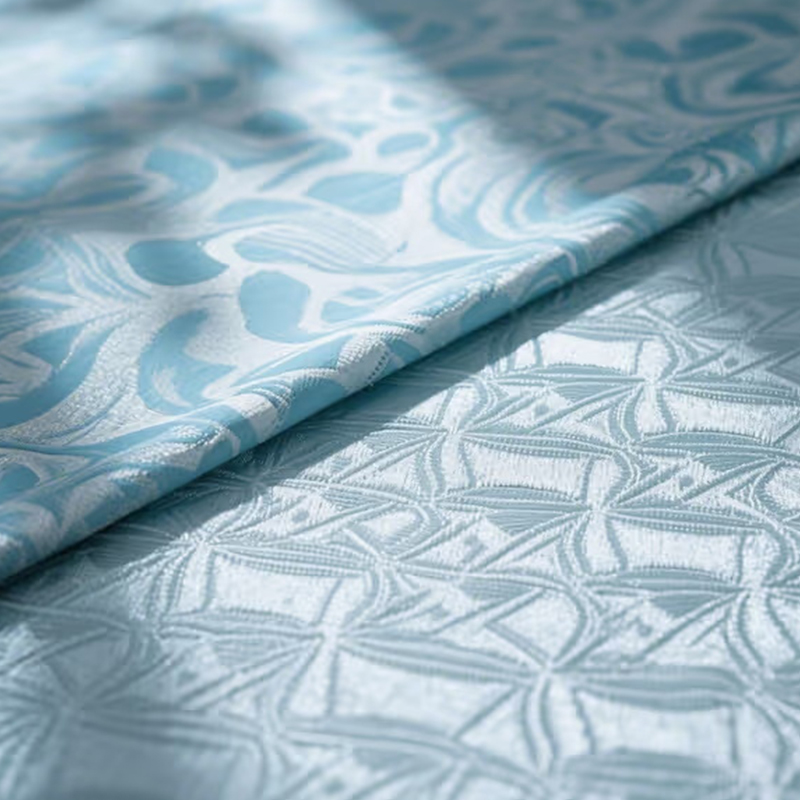 Thick Double-Faced Jacquard Textile FabricA structured, reversible jacquard with rich patterns on both sides, offering warmth and durability for autumn and winter designs.View Product →
For drape with a skin-friendly surface, a Roman cloth offers a smooth, dense hand that holds its shape without feeling stiff.
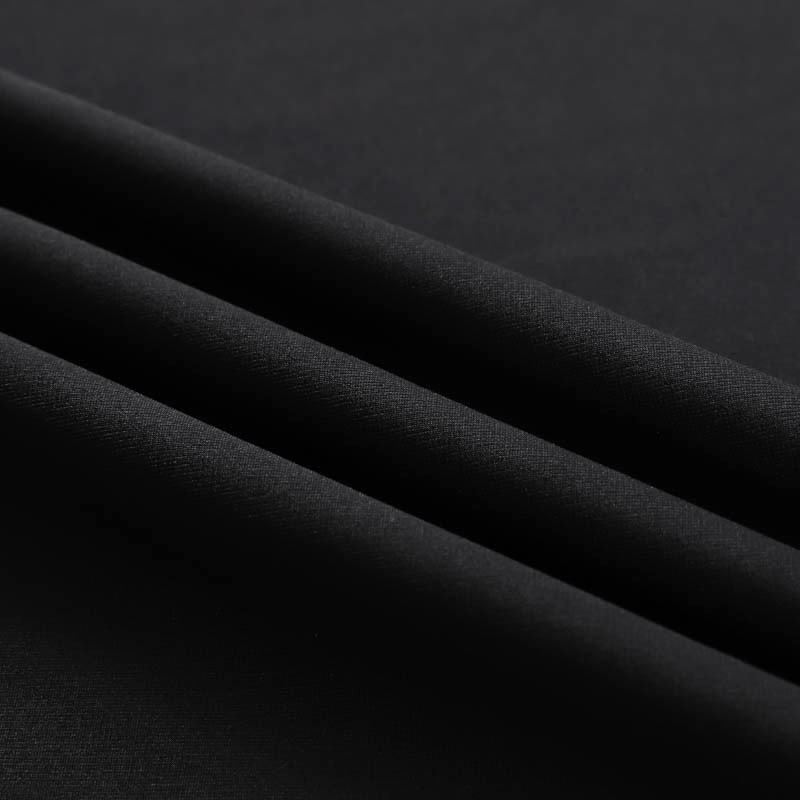 Soft Skin-Friendly Roman Cloth FabricA smooth, elastic Roman cloth with a soft, skin-friendly hand, suited to underwear, T-shirts, casual wear, and sportswear.View Product →
For a raised, tactile surface that still feels comfortable next to skin, a waffle knit is another route.
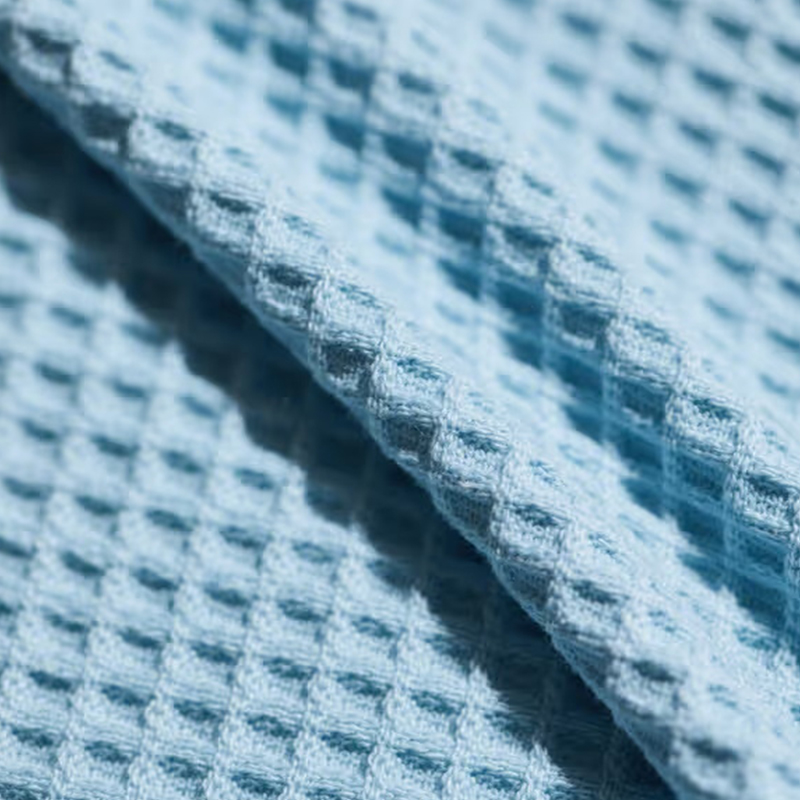 Breathable Waffle Knit Comfort FabricA lightweight waffle-textured knit with breathability and sweat-wicking comfort for summer shirts, exercise wear, and sports towels.View Product →
Twill’s feel is best described as smooth, dry, and quietly ribbed, with a drape that is soft but controlled. Fiber, weight, density, and finish decide whether that feel becomes crisp, warm, fluid, or rugged. Once you know what to touch for, twill becomes much easier to choose with confidence.