English
 中文简体
Chiffon is one of those fabrics most people recognise by hand long before they can name it. The first impression is cool — not cold, just noticeably cooler than the room — and then a sense of almost nothing: a light, dry, faintly grainy surface that seems to hover above the skin instead of resting on it. It does not slide like satin and it does not grip like cotton. It brushes across the forearm and drifts away.
That blend of coolness, dryness and near-weightlessness is what people usually mean by the "chiffon feel". Once you know where each of those sensations comes from, you can judge a swatch in seconds and predict how a length of cloth will behave on a body before it is ever cut.
The First Touch: Cool, Dry and Barely There
Put a piece of chiffon in your palm and three things register almost at once.
- Coolness. Chiffon is built from very fine filament yarns, so there is little mass to hold warmth. Heat leaves the surface quickly and the cloth reads as cool against skin, especially in silk and polyester versions.
- Dryness. The surface is matte rather than slick. Where satin feels soapy and smooth, chiffon feels like powdered glass that has been polished down — smooth, but with a whisper of texture.
- Weightlessness. Most chiffon is quoted somewhere between 20 and 40 grams per square metre. You feel the weight of the fold, not of the fabric, and within a few seconds the cloth takes on skin temperature and effectively disappears.
Rub a fold between thumb and forefinger and you will notice a faint grain. That comes from the crepe construction: yarns of alternating twist are used in the two directions of the weave, which gives the cloth its crinkled, slightly pebbled surface. It is a soft grain, closer to fine paper than to sandpaper, and it is the reason chiffon feels textured without feeling rough.
How It Moves: The Floating Sensation
Touch is only half the story. Chiffon is loosely woven and low in density, so it behaves like a very light membrane rather than a sheet of cloth. Press a handful and it collapses; release it and it settles into long, narrow folds that hang vertically rather than spreading into structured pleats. There is no bounce-back, because there is almost nothing there to bounce.
On the body this reads as floating. Walk in a chiffon skirt and the hem lifts, the layers separate a fraction, and the fabric trails the movement of your legs for a split second before catching up. That lag is why people describe chiffon as watery or air-like — it is not the fibre, it is the mass and the openness of the weave.
Layering changes the feel considerably. Two or three layers behave like a light crepe: more body, far less transparency, and a rounder hand. Chiffon that has been heat-set into pleats also feels springier than flat cloth, since the folds store a little elasticity of their own.
Sheer, Yet Smooth
Chiffon transmits light, and that visual softness feeds back into what your fingers report. Because the yarns are fine and the weave, although open, is tight and even, there is very little prickle. Good chiffon does not scratch at the neck or the inner arm, two areas that complain first about coarse cloth.
Where sheer fabrics often go wrong is surface finish. A well-finished chiffon has a dry, slightly powdery hand; a badly finished one feels glassy, almost clammy, and can catch on dry skin in winter.
When Chiffon Feels Wrong: Reading a Poor Swatch
Inexpensive chiffon usually announces itself through touch before anything else gives it away. Watch for these signals:
- A squeaky, waxy or plasticky surface, often leftover sizing or finishing agent.
- A stiff, papery hand that crackles when crumpled instead of softening.
- Static cling and a dry, electric crackle in low humidity.
- Grain that reads as grit rather than texture, usually uneven yarn or poor creping.
- No spring-back: the cloth stays creased after a light scrunch.
A strong chemical smell is a further warning sign of cheap dyes or finishing residue that will not survive a first wash. Well-made chiffon feels slightly cool, slightly grainy and quietly elastic — it creases easily and just as easily relaxes.
How Fiber Content Changes the Feel
Weave and finishing adjust chiffon, but the yarn decides most of the hand. The differences below are the ones buyers notice first on a swatch table.
| Fiber | Touch on skin | Drape and volume | Usually used for |
|---|---|---|---|
| Mulberry silk | Cool, fluid, faintly grippy when warm | Long liquid folds, soft volume | Eveningwear, scarves, bridal |
| Polyester | Cooler and drier, slightly glassy | Holds pleats and puff, crisper folds | Blouses, dresses, linings |
| Viscose or rayon | Soft, damp-cool, less spring | Heavier, rounder drape with more body | Skirts, summer dresses |
| Cotton or cotton blend | Drier and warmer, faint nap | Crisper, with noticeably less float | Shirts, casual layers |
Chiffon Next to Other Sheer Fabrics
If you are comparing samples, these are the nearest neighbours and how they differ in the hand:
- Georgette — same airiness, but a pebbled, crepey grain that feels far more textured and less slippery.
- Organza — crisp and almost papery, holds shape and rustles; chiffon never rustles.
- Crepe de chine — smoother and heavier, drifting closer to satin than to chiffon.
- Voile — denser and plainer, nearer to a fine cotton than to a floating cloth.
- Power mesh — open holes, cool to the touch, but stretchy and structural with no float at all.
Chiffon-Style Lightness in Knitted Fabric
Chiffon is woven, so no knit will reproduce it exactly. But the sensations people actually chase — cool, light, dry, softly draping — can be engineered into a knit through fine yarn and a low-density gauge. This is the conversation we have most often with customers who love the chiffon feel but need stretch, recovery or a lower care bill.
Ice silk. Fine-gauge polyester and nylon constructions finished for a cool, almost mineral touch, with a dry surface and a soft, close drape. It is the closest match we can offer to the coolness half of chiffon and works well for sun-protection layering, which is why we keep a plain sunscreen quality in stock. If you want the background on how this family of fabrics behaves, our guide to what ice silk fabric is and how to care for it covers the essentials.
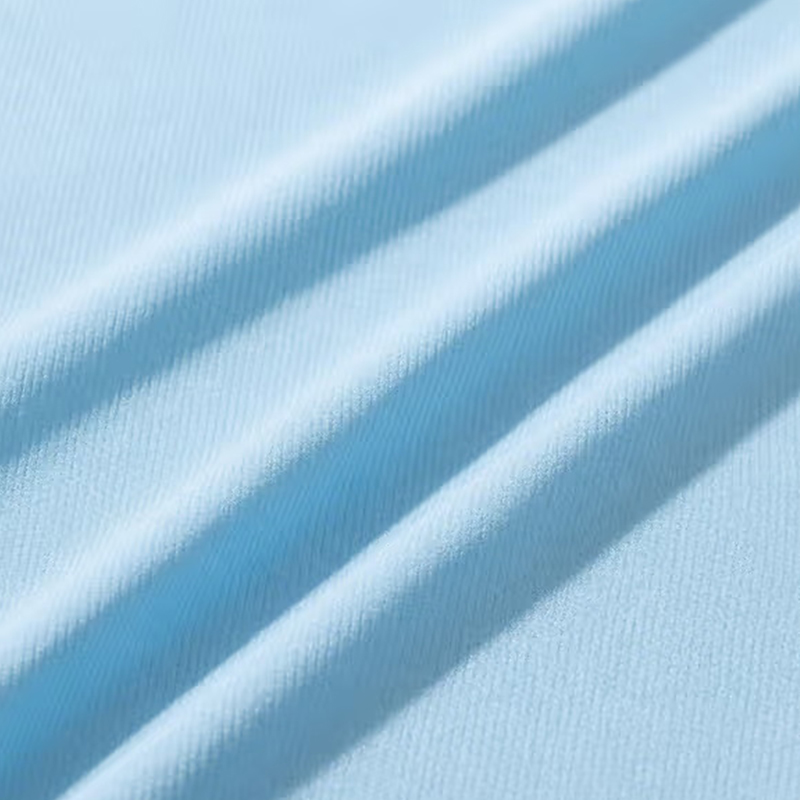 Plain Ice Silk Sunscreen Fabric for Outdoor UseA plain-woven ice silk fabric with sunscreen coating, positioned for outdoor UV-protection shirts and hats; its breathable, lightweight build suits warm-weather layering.View Product →
Milk silk. Softer and rounder than ice silk, with a little warmth in the hand and a gentle, milky sheen. It drapes in soft folds rather than sharp ones and is the more forgiving option for anyone who finds synthetic chiffon too cool or glassy. Our milk silk fabric range includes fine-gauge qualities with and without elastane, so you can choose between a relaxed drape and a light, controlled stretch.
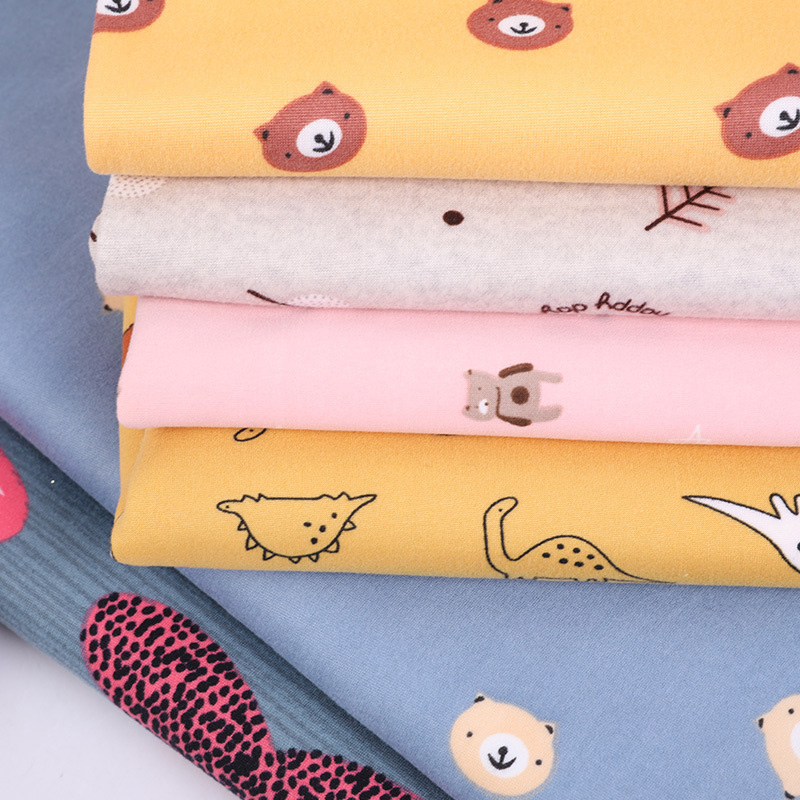 75D Ammonia-Free Milk Silk FabricSoft, skin-friendly 75D ammonia-free milk silk with breathability and moisture conductivity for shirts and T-shirts; a practical option in this milk silk range.View Product →
Fine-gauge single jersey. A thin 50D polyester jersey has the same bare, dry hand as chiffon's finer qualities and holds a faint grain when brushed one way. It is not sheer in the same way, but it layers without bulk and keeps its shape through a long day of wear.
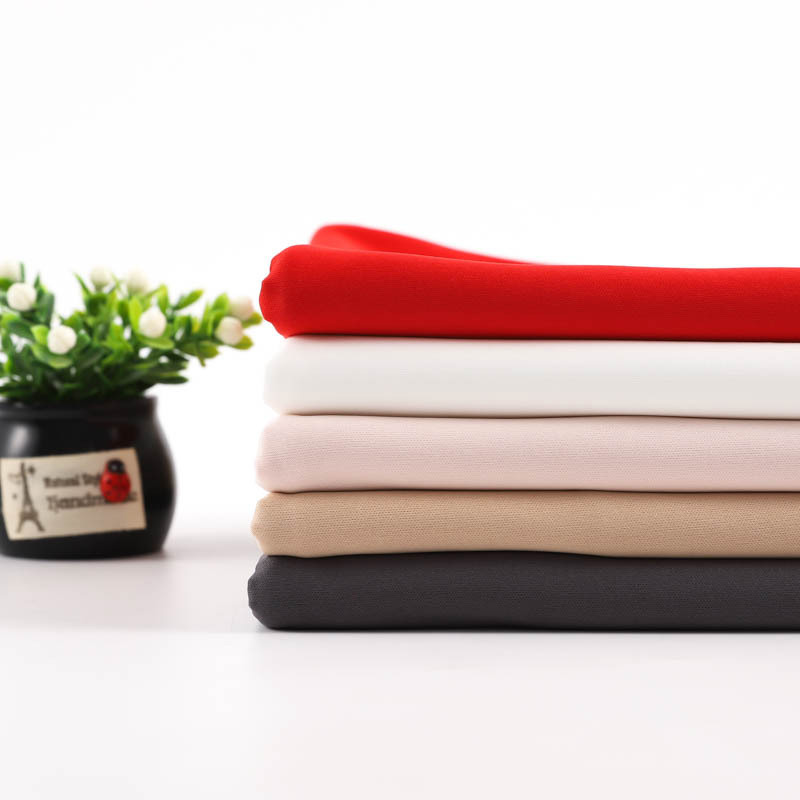 50D Polyester Single-Sided Flat Sweat ClothA soft, smooth 50D polyester single-sided flat fabric with moisture absorption and breathability for summer clothing and sportswear; durable and easy-care for T-shirts and vests.View Product →
What you give up is the drama: knits do not ravel, they do not rustle, and they hold slightly more shape on the body. For resortwear, scarves, lightweight layering and linings, most designers treat that as a fair trade.
Judging the Feel Before the Fabric Reaches Your Table
- Ask for grams per square metre and fiber composition in writing, not just a photo. Weight explains most of the drape.
- Request an A4 or larger swatch. Palms and forearms judge texture far better than a screen does.
- Scrunch it, hold it for ten seconds, then release. Good chiffon relaxes; poor chiffon stays crushed.
- Drape the swatch over your wrist and walk a few steps. This is the only quick test for how it will move.
- Ask about finishing and sizing. A good base cloth can still feel stiff if the finishing is heavy.
Keeping the Hand-Feel After Washing
Chiffon's touch is easily damaged by heat and mechanical action, so a little care preserves it for years.
- Hand-wash in cool water with a mild detergent; never wring or twist.
- Line dry in shade. Tumble heat flattens the crepe grain and dulls the surface.
- Store rolled or folded loosely rather than pressed under weight, so the crinkle does not become a permanent crease.
Quick Answers to Common Questions
Does chiffon feel itchy?
Rarely, if the yarn and finishing are good. Prickle usually comes from coarse or uneven filament, heavy sizing, or a dye residue that has not been rinsed out properly.
Is chiffon warm to wear in summer?
No. Its low mass and open weave make it feel cool and airy, which is exactly why it is popular for hot-weather dressing and evening layers.
Why does my chiffon feel stiff and papery?
Most often it is finishing rather than fiber: too much sizing or a hard surface treatment. Poor-quality polyester with a tight, flat weave can also feel crisp rather than soft.
Does it feel the same after a wash?
Often softer, provided it is hand-washed. Sizing washes out and the cloth relaxes, which improves the drape but reduces the crisper, papery body some people expect.
Touch is the fastest quality test there is, and chiffon rewards a careful hand. If you are weighing a woven chiffon against a knit that offers a similar cool, light handle, we are glad to send samples so you can compare both on your own table. Seeing and feeling the cloth side by side usually settles the question in minutes, and it saves a great deal of guessing later in production.