English
  中文简体
中文简体 The fundamental difference between knits and woven fabrics comes down to structure: woven fabrics are made by interlacing two sets of yarns at right angles, while knitted fabrics are constructed from a single continuous yarn looped through itself. This structural distinction drives every practical difference between the two — stretch, drape, durability, breathability, and the type of garment or product each fabric suits best. For most apparel decisions, the rule is straightforward: choose knitted fabrics when you need stretch and comfort, choose flat woven fabric when you need structure, shape retention, and durability.
Understanding the full picture — how each fabric is made, how it performs, and when to use which — is essential for designers, manufacturers, and anyone making informed purchasing decisions in fashion, home textiles, or technical applications.
How Knitted Fabrics Are Made and What Makes Them Unique
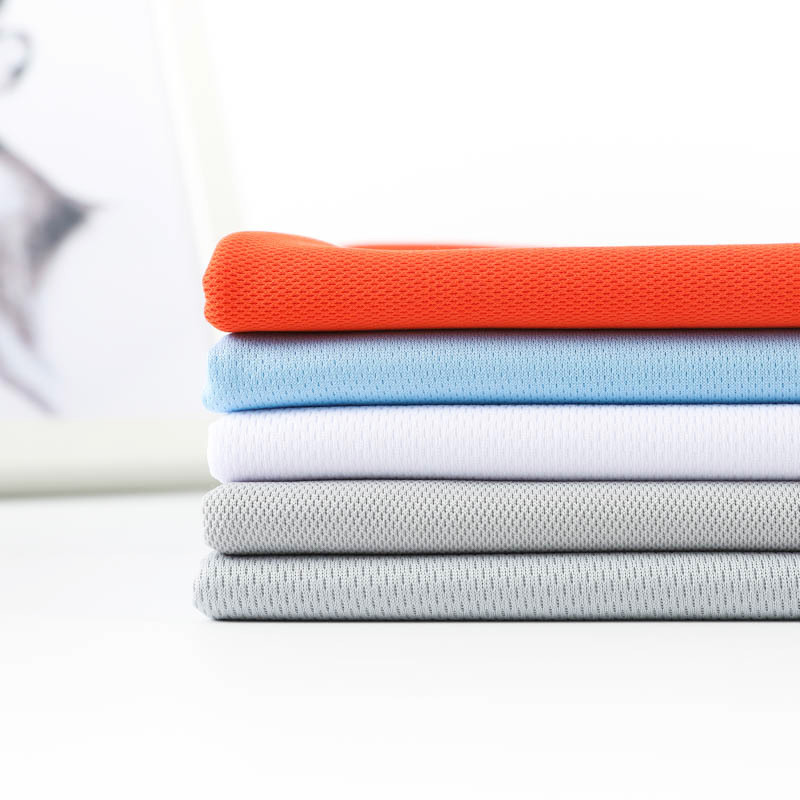
Knitted fabrics are produced by forming interlocking loops from one or more continuous yarns. Each loop is pulled through the previous one, creating a flexible, interconnected mesh structure. This loop-based architecture is what gives knitted fabrics their defining characteristic: stretch in multiple directions without any elastic yarn being added.
There are two primary categories of knitted fabrics based on how the loops are formed:
Weft Knitting
In weft knitting, yarn runs horizontally (across the width) and loops are formed row by row. This is the method used in hand knitting and most everyday stretch fabrics. Weft-knitted fabrics can be produced on flat-bed or circular knitting machines. Common weft-knit structures include:
- Jersey (single knit): The most common knit fabric — smooth on one face, textured on the other. Used in T-shirts, underlayers, and casual tops. Typically stretches 50–100% in the horizontal direction.
- Rib knit: Alternating knit and purl columns create a fabric that stretches significantly in both directions — often 100–150% horizontal stretch. Used for cuffs, collars, waistbands, and fitted garments.
- Interlock knit: Two layers of rib knit interlocked together, producing a heavier, more stable double-faced fabric. Less stretch than jersey but better shape retention. Used for polo shirts and baby clothing.
- French terry and fleece: Loop-backed or brushed-back jersey structures used for sweatshirts, hoodies, and athletic wear.
Warp Knitting
In warp knitting, multiple yarns run vertically (along the length of the fabric), with loops formed simultaneously across the width. Warp-knitted fabrics are significantly more stable than weft-knitted fabrics — they resist runs and have less horizontal stretch. Key warp-knit structures include:
- Tricot: Lightweight, smooth, and run-resistant. Widely used in lingerie, activewear lining, and automotive upholstery.
- Raschel: Open, lace-like structures or dense net fabrics. Used in lace, mesh, and technical textiles such as geotextiles and crop protection netting.
- Spacer fabrics: Three-dimensional warp-knit structures with two outer surfaces connected by a middle layer — used in athletic footwear, medical cushioning, and car seat padding.
A key vulnerability of weft-knitted fabrics is that a single broken loop can cause a "run" — a chain unraveling along a column. Warp-knitted fabrics do not run, because each loop is secured by adjacent yarns from a different warp thread.
What Is Flat Woven Fabric and How Weaving Structures Work
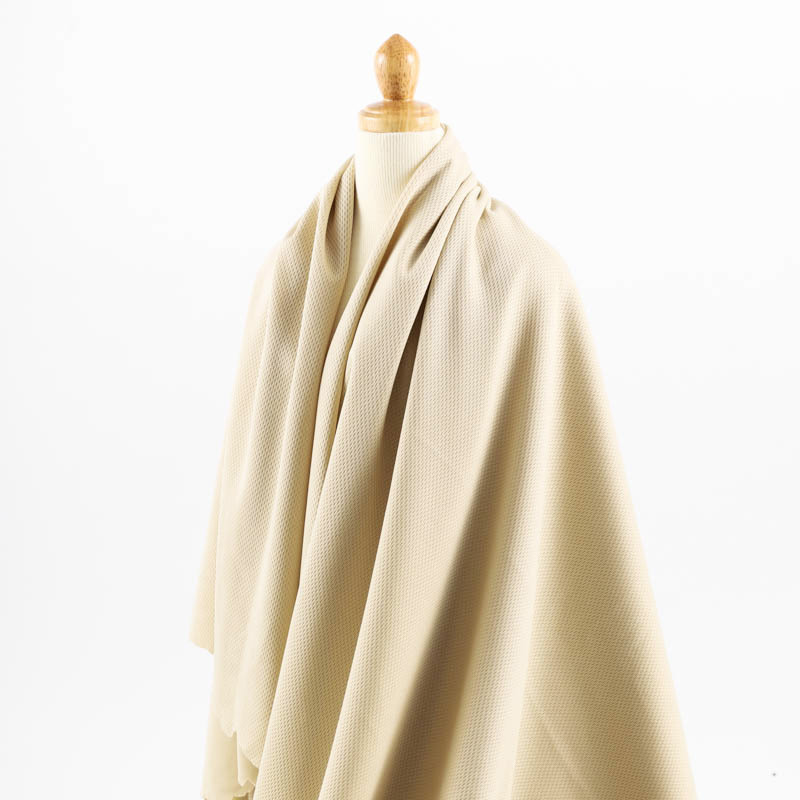
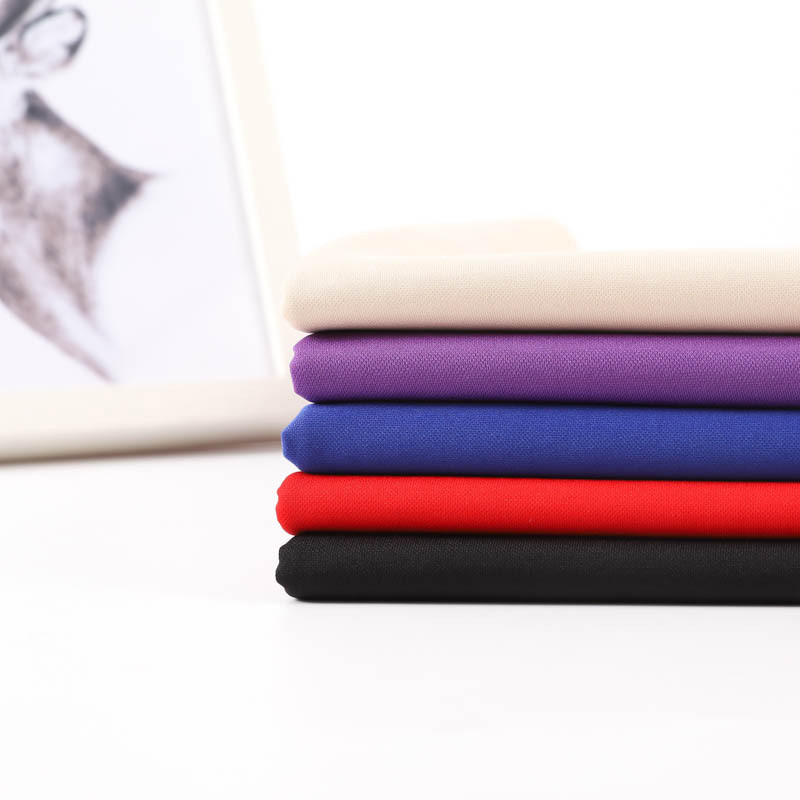
Flat woven fabric is produced on a loom by interlacing two perpendicular sets of yarns: the warp (yarns running lengthwise, under tension on the loom) and the weft (yarns passed horizontally across the warp, also called filling yarns). The term "flat woven" distinguishes standard loom-woven fabrics from pile weaves (such as velvet or terry cloth), which have loops or cut fibers protruding from the surface.
The pattern in which warp and weft yarns interlace is called the weave structure, and it is the primary determinant of the fabric's appearance, texture, and performance. The three foundational flat weave structures are:
Plain Weave
The simplest and most common weave — each weft yarn passes over one warp yarn and under the next in alternation. Plain weave produces a firm, balanced fabric with good durability and minimal stretch. Examples include muslin, canvas, organza, chiffon, and most shirting fabrics. Plain weave offers the highest number of interlacings per unit area of any weave structure, giving it excellent abrasion resistance but limited drape.
Twill Weave
In twill weave, each weft yarn floats over two or more warp yarns before passing under one, with each row offset by one yarn to create a diagonal rib pattern. Twill fabrics are softer and more drapeable than plain weave, with better resistance to wrinkling. Classic twill fabrics include denim, gabardine, chino, and herringbone. Denim jeans — one of the most produced flat woven fabrics in the world, with over 2 billion pairs manufactured annually — are a 3×1 twill weave (one weft yarn under, three warp yarns over).
Satin Weave
Satin weave has long floats — weft yarns pass over four or more warp yarns before interlacing — producing a smooth, lustrous surface with excellent drape. The low number of interlacings makes satin fabrics less durable but visually striking. Examples include charmeuse, duchess satin, and sateen (a cotton-based satin weave). Satin fabrics are common in eveningwear, lingerie, and luxury bed linen.
Beyond these three base structures, flat woven fabrics can incorporate more complex patterns through jacquard weaving (programmed loom control of individual warp threads), dobby weaving (small geometric repeat patterns), and leno weaving (twisted warp yarns for open, stable mesh structures used in scrims and curtain sheers).
Knits vs Woven: A Direct Performance Comparison
The structural difference between knitted and woven fabrics translates directly into a set of performance trade-offs that drive garment and product design decisions. The table below summarizes the key differences across the most practically relevant criteria.
| Property | Knitted Fabrics | Flat Woven Fabrics |
|---|---|---|
| Stretch | High (50–150%+ in width) | Minimal (2–5% on bias only) |
| Shape retention | Moderate (can bag or sag) | Excellent (holds structure) |
| Drape | Excellent (soft, fluid) | Variable (depends on weave and weight) |
| Breathability | High (open loop structure) | Moderate (depends on thread count) |
| Wrinkle resistance | Excellent (loops absorb stress) | Variable (twill > plain for wrinkle resistance) |
| Fraying at cut edges | Does not fray | Frays — must be seamed or finished |
| Seam strength | Lower (seams must stretch with fabric) | Higher (stable seam lines) |
| Cutting and sewing ease | More challenging (stretches under needle) | Easier (stable, doesn't shift) |
| Typical use | T-shirts, activewear, underwear, socks | Shirts, trousers, suits, denim, home textiles |
Stretch, Drape, and Fit: Why Knitted Fabrics Dominate Activewear and Comfort Clothing
The loop structure of knitted fabrics allows them to elongate and recover without breaking individual fibers — the loops simply open and close. This gives knits a natural stretch even without any elastane or spandex content. When elastane (typically 2–20% by weight) is blended in, stretch values of 200–400% with near-complete recovery become achievable — the performance basis for compression sportswear, swimwear, and yoga pants.
This stretch property drives the dominance of knitted fabrics in athletic and comfort apparel. The global athletic wear market — valued at approximately $220 billion in 2023 — is overwhelmingly constructed from knit fabrics, particularly polyester jersey, nylon tricot, and polyester/elastane blends. A typical performance running shirt is made from 100% polyester single-jersey knit, which provides moisture wicking, freedom of movement, and wrinkle resistance all in one structure.
Drape is another key advantage. Because knit loops can shift relative to one another, knitted fabrics fall and flow against the body's contours. This makes jersey, for example, excellent for draped necklines, body-skimming silhouettes, and wrap-style garments. Flat woven fabrics, by contrast, hold a shape — which is why a tailored blazer, a pleated trouser, or a shirt collar relies on woven construction to maintain its geometry through wear.
Structure and Durability: Where Flat Woven Fabric Has the Advantage
Flat woven fabrics' rigid interlacement structure gives them properties that knits fundamentally cannot match at equivalent yarn weights.
Tensile Strength and Tear Resistance
Because warp and weft yarns run in straight lines under tension (rather than looping), they transmit applied forces more efficiently. A plain-weave cotton canvas at 400 g/m² will have significantly higher tensile and tear strength than a jersey knit at the same weight. This is why woven fabrics are standard for workwear, military uniforms, upholstery, bags, and any application where resistance to tearing, puncture, or abrasion is critical.
Dimensional Stability
Flat woven fabrics resist distortion — they do not grow wider when pulled lengthwise or sag with repeated wear as knits can. This dimensional stability is essential for structured garments like blazers and trousers, where maintaining cut lines, seam alignment, and silhouette over time depends on the fabric not creeping or stretching. Woven interlinings are sewn into knit or woven outer shells precisely to provide this structural anchor.
Seam Integrity
Woven fabrics hold seam stitching firmly because the warp and weft yarns act as a stable matrix resisting needle penetration and stitch pull-through. Knitted fabrics — being elastic — can allow seam stitches to pop when the fabric stretches beyond the stitch's elongation capacity. This is why sewing knitted fabrics requires specific needle types (ballpoint needles that push between loops rather than piercing yarns), stretch stitches, or serging, whereas most woven fabrics can be sewn with a standard straight stitch.
Fabric Weight, Thread Count, and How to Read Fabric Specifications
Knitted fabrics and woven fabrics are specified using different measurement systems, which can cause confusion when sourcing or comparing materials.
Knitted Fabric: GSM (Grams per Square Meter)
Knitted fabrics are almost universally specified by GSM (grams per square meter), which describes weight per unit area. Typical GSM ranges for common knit applications:
- 100–140 GSM: Lightweight jersey for summer T-shirts and base layers
- 150–180 GSM: Standard jersey for everyday T-shirts and casual tops
- 200–250 GSM: Heavier jersey or interlock for polo shirts, sweatshirts, or premium T-shirts
- 280–400 GSM: Fleece and heavy terry for outerwear, hoodies, and toweling
Woven Fabric: Thread Count and GSM
Flat woven fabrics are specified by both GSM and thread count (ends per inch × picks per inch = total threads per square inch). Thread count is particularly used for bedding and fine shirting:
- 100–200 TC: Workwear canvas, basic sheeting, denim (which does not use TC but runs 60–80 ends × 40–50 picks per inch)
- 200–400 TC: Standard quality shirting and bed linen
- 400–600 TC: Premium bed linen; above 400, quality depends more on fiber quality than thread count
It is worth noting that inflated thread count claims in bed linen marketing (1000+ TC) are typically achieved by counting multi-ply yarns individually — a 400 TC fabric made from single-ply combed cotton is generally of higher quality than a 1000 TC fabric made from twisted multi-ply yarns.
Fiber Choice and How It Interacts with Knit vs Woven Construction
Both knitted and woven fabrics can be made from virtually any fiber — natural, synthetic, or blended. However, certain fibers perform better in one construction than the other, and the combination of fiber and structure determines the fabric's real-world behavior.
| Fiber | Best in Knit | Best in Woven | Key Consideration |
|---|---|---|---|
| Cotton | Jersey, interlock, terry | Denim, shirting, canvas | Knit cotton shrinks more; woven cotton is more stable |
| Polyester | Activewear, tricot, mesh | Lining, technical fabric, workwear | Polyester knit resists wrinkles and moisture wicks well |
| Wool | Sweaters, jerseys, socks | Suiting, overcoating, flannel | Woven wool suits hold structure; knit wool provides warmth and stretch |
| Nylon | Hosiery, swimwear, tricot | Outerwear shells, bags, parachute fabric | Woven nylon has superior abrasion resistance for hard-use applications |
| Silk | Jersey knit (drape tops) | Charmeuse, crepe, organza | Woven silk represents the majority of silk fabric production |
| Linen | Rarely knitted (low elasticity) | Shirting, suiting, home textiles | Linen's low elongation makes it poorly suited to knit loop formation |
Sewing and Garment Construction: Key Differences Between Working with Knits and Wovens
For sewers, fashion students, and production pattern makers, the construction requirements for knitted fabrics and flat woven fabrics differ significantly enough to require different techniques, machines, and pattern adjustments.
Seam Allowances and Pattern Adjustments
Woven fabric patterns typically use a 5/8" (1.5 cm) seam allowance, which accommodates fraying and provides a stable seam. Knit fabric patterns can use as little as 1/4" (6 mm) seam allowance because knits don't fray, and a narrower seam is less bulky in a stretchy garment. Patterns designed for woven fabrics should not be directly used for knits without adjustment — a woven-fit pattern will pull at the seams on a knit because it has no ease for stretch.
Stitch Types
- Woven fabrics: Standard straight stitch (2.5 mm length) for most seams; French seams, flat-felled seams, or serged edges to prevent fraying.
- Knitted fabrics: Stretch stitch, zigzag stitch, or serger (overlock) for seams that must flex. A straight stitch on knit will break under tension. Coverstitch machines produce the characteristic double-needle hem seen on commercial T-shirts.
Cutting and Grain Line
Flat woven fabrics have a clear grain line (the direction of warp yarns), and cutting off-grain creates garments that twist or hang incorrectly. Knitted fabrics have a "course" direction (horizontal rows) and a "wale" direction (vertical columns), with the greatest stretch typically running horizontally. Most knit garment patterns are cut with the greatest stretch running around the body (horizontal) to maximize comfort and fit.
Care, Laundering, and Longevity: Practical Differences
Knitted and woven fabrics respond differently to washing, drying, and storage, and understanding these differences prevents premature damage and extends garment life.
Shrinkage
Knitted fabrics — particularly cotton knits — are more prone to shrinkage than their woven equivalents because the loop structure allows more fiber relaxation during washing. An untreated cotton jersey can shrink 5–8% in length and 3–5% in width after the first machine wash at 40°C. Pre-shrunk or Sanforized treatments reduce this, but cotton knits generally require cooler wash temperatures and air drying to maintain their original dimensions. Woven cotton fabrics like shirting typically shrink 2–4% total under the same conditions.
Pilling
Knitted fabrics pill more readily than woven fabrics because the loop structure brings more fiber ends to the surface, which can tangle and mat under friction. Short-staple fibers (standard cotton or acrylic) pill more than long-staple or filament fibers. Turning knit garments inside out before washing reduces surface abrasion during the wash cycle and significantly slows pilling.
Ironing and Storage
Flat woven fabrics — especially cotton and linen — wrinkle significantly and typically require ironing to look presentable. Knitted fabrics are largely wrinkle-resistant, as the loop structure absorbs compressive stress without creating permanent creases. However, knitted garments should be stored folded, not hung — hanging a heavy knit on a hanger causes the fabric to stretch and distort under its own weight, permanently changing the garment's shape.
Choosing Between Knits and Woven Fabrics: A Decision Guide by Application
The right fabric choice depends on the end use. The following guide outlines which construction — knit or woven — is typically correct for the most common applications, and why.
- T-shirts and casual tops: Knit (jersey) — stretch provides comfort and ease of movement; no tailored fit required; wrinkle resistance important.
- Dress shirts and blouses: Woven (plain or twill) — collar, cuffs, and button placket require structure that wovens provide; crisp appearance is the standard.
- Trousers and tailored skirts: Woven — dimensional stability for crease retention and structured silhouette; wovens hold pleats, seams, and drape correctly.
- Activewear and sportswear: Knit (jersey, tricot, mesh) — stretch and recovery essential; moisture management often achieved through knit structure and synthetic fiber combination.
- Swimwear: Knit (warp-knit with elastane) — four-way stretch required to conform to body movement in water; chlorine-resistant nylon/elastane knit is standard.
- Denim jeans: Woven (twill) — structural integrity and abrasion resistance are the core requirements; stretch denim is woven with elastane weft yarns, not knitted.
- Bed linen and pillowcases: Woven (plain or sateen) — dimensional stability for making up beds neatly; higher thread count wovens offer softness without stretch distortion.
- Sweaters and knitwear: Knit (weft or warp) — thermal insulation through loop air pockets; stretch allows garment to fit a range of body sizes without rigid sizing.
- Upholstery and furniture fabric: Woven (typically jacquard or twill) — abrasion resistance and dimensional stability are critical; wovens withstand repeated mechanical stress without deforming.
- Medical compression garments: Knit (warp-knit with high elastane content) — precise, graduated compression requires a fabric that maintains consistent stretch force over a defined elongation range; wovens cannot provide this.