English
 中文简体
If you have ever stood in a fabric shop or scrolled through an online textile catalog and wondered, “How big is a yard of fleece?” you are not alone. For hobby sewists and garment manufacturers alike, understanding the true dimensions of a yard is the key to accurate budgeting and waste-free cutting. As a knit fabric producer, we hear this question every time a customer asks for samples or places a bulk order. The short answer is that one yard equals 36 inches in length, but that is only half of the story.
If you are new to textile terminology, our overview of knitted fabrics can help clarify how fleece fits into the broader fabric family. In the sections below, we break down exactly how big a yard of fleece is, how much you need for common projects, and what to check before you buy.
The Basic Dimensions of a Yard of Fleece
Fleece is sold from rolls of a fixed width. When you order a yard, the cutting process begins at the edge of the roll and measures 36 inches (91.4 centimeters) down the length. The remaining dimension, the width, is determined by the knitting machine and finishing line. Most fleece produced today is 58 to 60 inches wide, but narrower widths such as 44/45 inches still appear in small quilting shops and for special applications.
| Fabric width | Length (1 yard) | Total area | Common use |
|---|---|---|---|
| 44–45 in (112 cm) | 36 in (91 cm) | 1,620 sq in / 11.3 sq ft / 1.05 sq m | Crafts, small blankets, sleeves |
| 54 in (137 cm) | 36 in (91 cm) | 1,944 sq in / 13.5 sq ft / 1.25 sq m | Garments, throw pillows |
| 58–60 in (147–152 cm) | 36 in (91 cm) | 2,088–2,160 sq in / 14.5–15 sq ft / 1.35–1.39 sq m | Blankets, outerwear, yardage |
To put that in perspective, a 58-inch wide yard of fleece gives you an area of about 2,088 square inches, which is equivalent to 14.5 square feet or 1.35 square meters. That is enough to cover the front and back of a small child’s blanket, or one large panel for a throw. As you can see, the width is just as important as the length when you are planning a project.
How Much Fleece Do You Need for Common Projects?
Yardage requirements for fleece depend on the size of the finished item, the fabric width, and the type of fleece you choose. Standard fleece does not fray, so you do not need to add a lot for seam finishing, but you do need extra for hem allowances, pattern matching, and shrinkage after washing.
| Project | Recommended yardage | Notes |
|---|---|---|
| Baby blanket (approx. 30×40 in) | 1 yard | Use the full width for a soft edge |
| Child blanket (approx. 40×60 in) | 1.5 yards | Perfect for a tie blanket |
| Adult blanket (approx. 50×60 in) | 2–2.5 yards | More if you want a long drape |
| Throw quilt (approx. 60×80 in) | 2.5–3 yards | Allows continuous backing |
| Long-sleeve top | 1.5–2 yards | Depends on pattern and width |
These estimates assume a fabric width of at least 55 inches. If you are working with a narrower width, you may need to add another 0.5 to 1 yard to achieve the same coverage. For garments, sleeves and hoods will consume more fabric than a simple rectangle, so always check the pattern envelope or run a marker layout.
Because fleece is a knit rather than a woven, it does not fray easily, but it can stretch along the edges. Understanding this distinction between knit and woven fabrics is useful when planning seams.
How to Calculate Yardage for a Custom Project
Once you know the finished size, calculating the required yardage is straightforward. Start by deciding whether the fleece has a one-way nap or print. If it does, all pattern pieces must face the same direction, which increases waste. If not, you can rotate pieces more freely and fit more onto the same amount of fabric.
- Measure the width and height of each piece you need to cut.
- Add a cutting allowance of 2 to 4 inches per side for seams, hems, and shrinkage.
- Map the pieces on the fabric width. For a 60-inch wide fleece, you can often place a 58-inch wide panel with a little room to spare.
- Multiply the length of the longest piece by the number of pieces that will fit side by side.
- Add an extra 10 percent for mistakes, pattern matching, or future repairs.
From our factory experience, this last step is the one most buyers skip. A little extra fleece is much easier to store than to reorder, especially if you are cutting in batches for a production run.
What to Look for When Buying Fleece by the Yard
Not all fleece is the same. The weight, surface texture, stretch, and recovery vary depending on the fiber composition and knitting structure. For everyday blankets and sweatshirts, a mid-weight fleece with a soft brushed back is a safe choice. For athletic wear, you may want a thinner version with more four-way stretch and moisture-wicking properties.
It is also important to verify the actual width of the roll. Some suppliers list a width range, and the real cutting width can be slightly different. If you are buying online, ask for a sample swatch before committing to yardage.
At our mill, we produce a variety of warm, fleece-like knitted fabrics that can be used for similar projects. For example, our thick cotton-polyester air layer fabric has a lofty, warm hand and is often chosen for jackets and blankets.
 Cotton-Polyester Thick Warm Air Layer FabricThis air layer fabric offers warmth and elasticity for jackets and blankets. Its exact width and structure affect bulk costs, so specifications matter for large orders.View Product →
In bulk purchasing, the width also affects the final cost per usable square foot, which is why we share exact specifications with every customer.
Why Fabric Width Matters More Than You Think
The difference between a 45-inch and a 60-inch wide yard may seem modest, but it changes the number of pieces you can cut from the same length. For example, a 60-inch wide yard of fleece gives you about 33 percent more area than a 45-inch wide yard. That can be the difference between one adult blanket and two child blankets from the same order quantity.
In industrial settings, width is a production parameter. Our circular knitting machines are available in different cylinder diameters and gauges, so we can control not only the width but also the density and hand feel of the fabric. This kind of flexibility matters when a customer needs a specific drop or a consistent width across many batches.
For projects that need a soft, plush side, a double-sided brushed flat cloth is another option to consider. It is lighter than some heavy air layers but still offers a cozy touch.
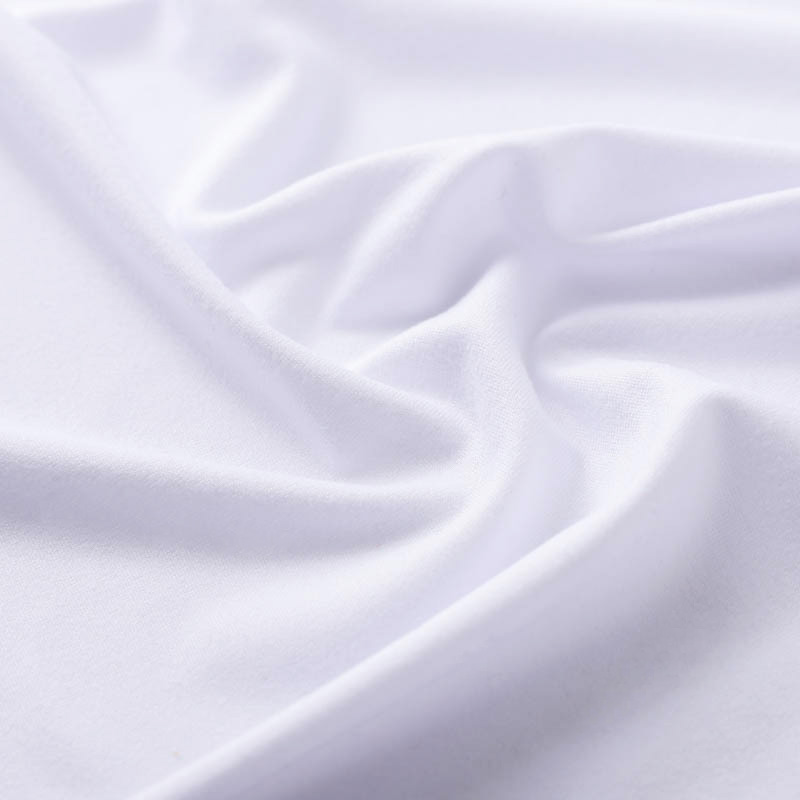 100D Milk Silk Double-Sided Furry Flat ClothA soft, plush double-sided flat cloth with good durability and breathability. It is a lighter alternative to heavy air layers for cozy projects like hoodies and throws.View Product →
Choosing the Right Fleece Alternative from a Supplier's Perspective
When you plan a production run, the question is not just “how big is a yard of fleece,” but “what kind of fleece-like performance does my product need?” If you are making warm hoodies, joggers, or throw blankets, there are many knitted fabrics that offer similar benefits to traditional polyester fleece. Some are more breathable, some are softer, and some have better recovery after stretching.
From our viewpoint as a manufacturer, it is always worth looking at the full construction of a fabric, not just its surface. A tightly knitted sweat-shirt fabric can give you the warmth and durability you want without the weight of a thick pile. We produce a range of these materials and are happy to discuss your specification.
 Pure Cotton Breathable Warm Sweatshirt FabricA tightly knitted pure cotton fabric that provides warmth, durability, and moisture absorption. Ideal for autumn and winter casual wear, sportswear, and home clothing.View Product →
Ultimately, knowing the size of a yard helps you communicate clearly with your supplier and avoid last-minute changes. Whether you order one yard for a test sample or several thousand meters for a factory run, the same measurement logic applies.
So, how big is a yard of fleece? It is 36 inches long and, depending on the roll width, can be anywhere from 44 to 60 inches across. That gives you roughly 11 to 15 square feet of usable fabric. By thinking in terms of total area and not just length, you will make far better purchasing decisions. And if you are sourcing for bulk or OEM production, remember that a knowledgeable supplier can help you choose a fabric that fits both your size requirements and your performance goals.