English
  中文简体
中文简体 Order fabric described as "flat woven" from two suppliers and you can receive two very different swatches: one firm and stable that frays at the cut edge, the other softer with visible give and an edge that curls. Both carry the same name, yet neither will behave like the other on the cutting table or in the finished garment. Put simply, flat woven fabric is cloth made by interlacing two sets of yarn at right angles, so every crossing point locks the structure in place. That construction produces a smooth, low-stretch, dimensionally stable textile used in everything from poplin shirts to tent flysheets. What follows covers how the structure works, which constructions sit under the term, where the fabric performs best, and what to confirm before you commit to a bulk order — including a naming trap that catches even experienced buyers.
What Flat Woven Fabric Is
Flat woven fabric is built on the plain weave, the simplest structure in textiles: each warp yarn, running lengthwise, passes alternately over and under each weft yarn, running crosswise. Because the yarns interlace at every intersection instead of floating over several, the cloth is mechanically locked together, and that locking explains most of its behavior.
The properties that matter to buyers follow directly from it:
- Dimensional stability — the fabric holds its shape, resists sagging, and keeps its cut dimensions through handling.
- A smooth, flat surface — no pile, no loops, and no pronounced relief, which suits clean printing and crisp silhouettes.
- Low stretch — give is minimal except along the 45-degree bias, which cutters use deliberately for shaping.
- Good strength for its weight — dense interlacing spreads load across many contact points.
- Fraying cut edges — raw edges shed yarns and need seaming, overlocking, or a hem.
Density matters as much as structure. A tightly woven plain fabric in fine polyester yarn can feel paper-thin yet block wind effectively, while an open muslin in the same weave breathes freely. When you compare swatches, read ends and picks per inch or GSM alongside the weave itself.
Common Types of Flat Woven Fabric
Flat woven describes surface character as much as structure. A flat weave has no raised texture — unlike twills, which read as diagonal lines, or velvets, which carry a pile — but it is not limited to plain-looking cloth; color, yarn variation, and print carry the design. The constructions below appear constantly in apparel, home textiles, and outdoor gear.
| Fabric | Distinguishing features | Typical uses |
|---|---|---|
| Poplin / broadcloth | Fine, dense plain weave with a smooth, slightly lustrous face | Shirts, dresses, uniforms |
| Taffeta | Crisp hand with a subtle sheen; rustles when moved | Eveningwear, linings, decorative accents |
| Muslin / calico | Light, open plain weave, often in undyed cotton | Toiles, linings, backings, household cloth |
| Canvas / duck | Heavy plain weave in thick, firmly twisted yarns | Bags, workwear, awnings, floor coverings |
| Ripstop | Plain weave reinforced with thicker yarns on a grid | Tents, outdoor jackets, packs, kites |
Across these types, weight runs from gauze-light muslins below 60 GSM to heavy duck and canvas above 400 GSM, so the end use should drive the specification rather than the trade name.
Flat Woven vs. Knitted Fabric
Most sourcing decisions for flat woven fabric are really decisions between a weave and a knit, and the two differ at nearly every stage of production:
- Stretch: knit loops deform in every direction; wovens give only on the bias.
- Wrinkles: wovens crease and hold a press; knits resist sharp creases and recover softly.
- Edges: woven cut edges fray; single-jersey knit edges curl, and a broken loop can ladder.
- Shrinkage: both move after washing, but knits generally relax more, so tolerances should be agreed per construction.
If you are weighing the two for a specific product, our guide to the key structural differences between knits and wovens covers construction, behavior, and end-use matching in more depth.
Why Some "Flat Woven Fabric" Is Actually Knitted
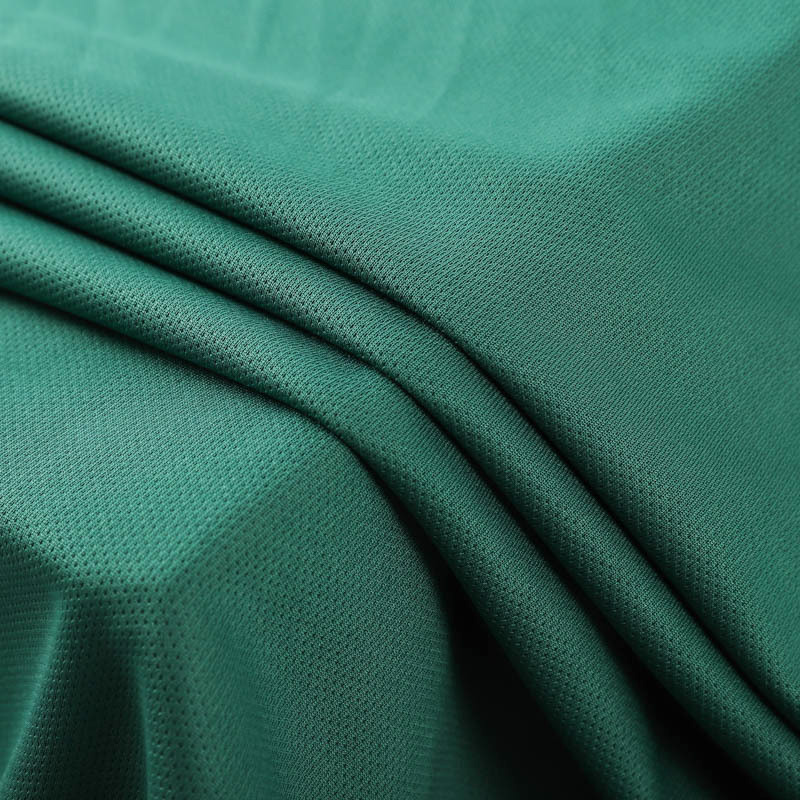
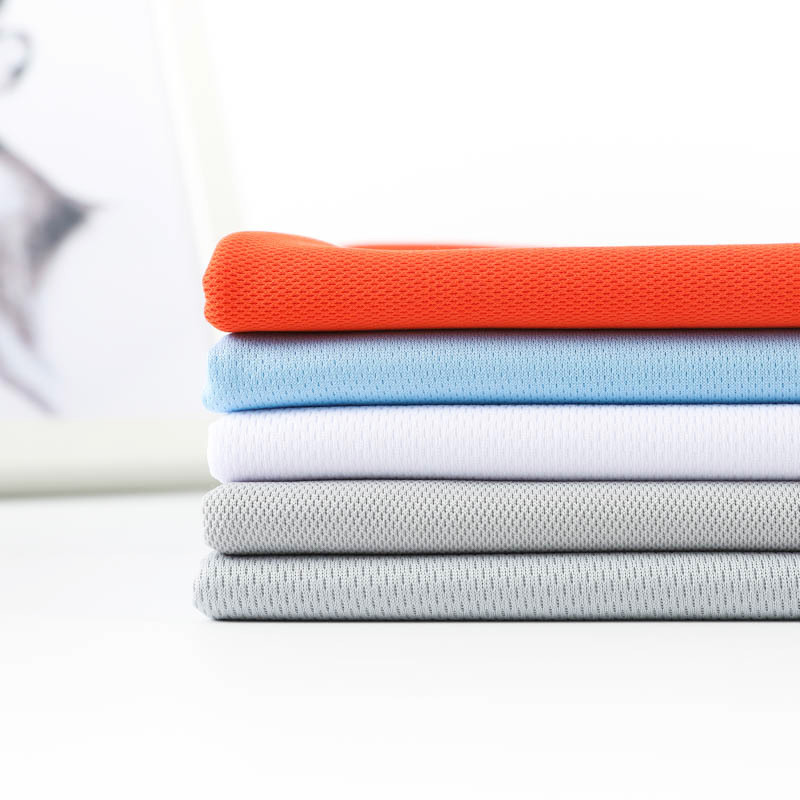
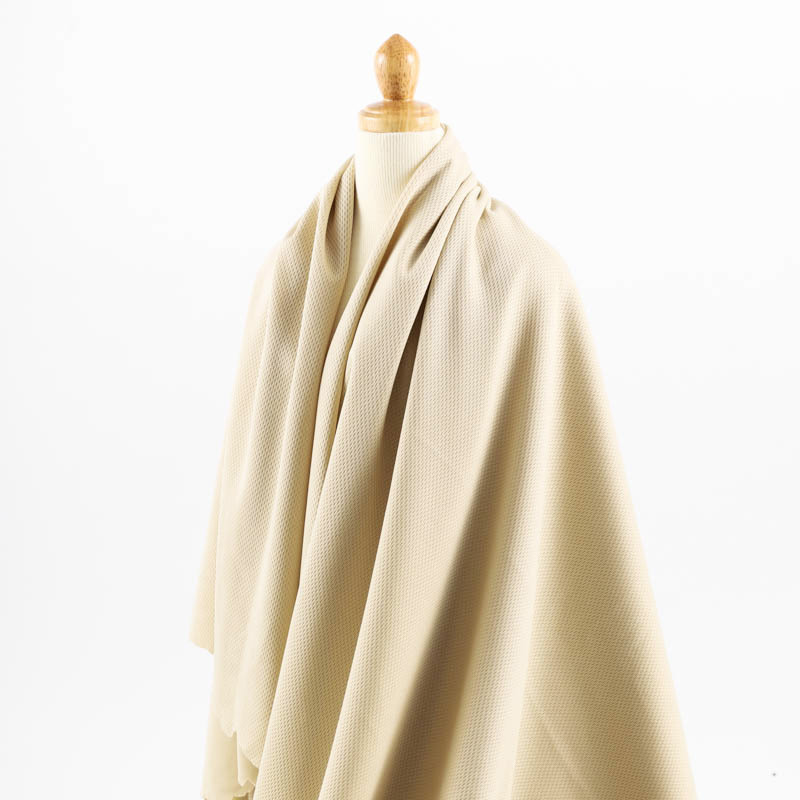
Here is the naming trap. In many supplier catalogs — especially those run by knitting mills — the label "flat woven fabric" is applied to smooth-surface knitted cloth as well, because the trade term describes a flat, even face rather than a true weave. Under that heading you will usually find single-sided flat cloth, with a smooth face and a technical back, used for T-shirts and garment linings, and double-sided flat cloth, stable on both faces, used where structure matters. The surface is genuinely flat, but the yarns are looped, not interlaced.
Two quick tests settle the question on any swatch. Pull it gently in all four directions: a knit stretches everywhere, while a woven resists except on the bias. Then look at the cut edge: fraying points to a weave, curling to a knit. A 75D fully polyester single-sided flat cloth for garment linings or a 50D knit sweat cloth will feel and sew very differently from a poplin of the same weight, even when both are listed as flat woven fabric.
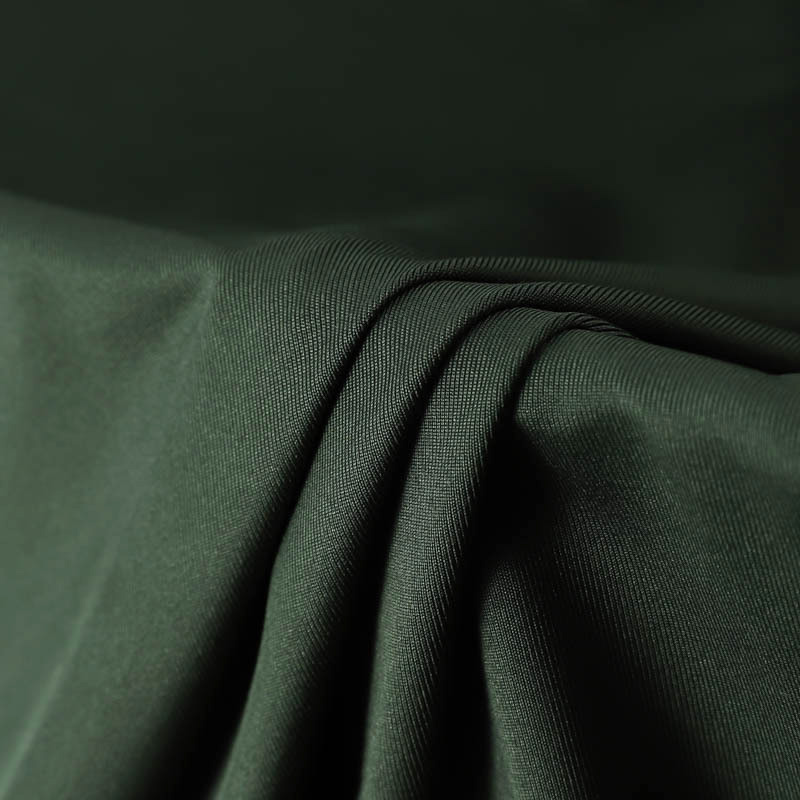
 75D Single-Sided Polyester Flat Cloth for Garment LiningsThis fine 75D polyester flat cloth slides smoothly over base layers and protects seam allowances inside jackets. It complements the surrounding discussion of poplin and broadcloth linings, offering a practical lining option alongside heavier flat woven shirting fabrics.View Product →
Where Flat Woven Fabric Performs Best
Apparel and linings
Poplin and broadcloth hold a press, take clean prints, and keep tailored silhouettes sharp, which is why they dominate shirting and uniform programs. Smooth flat cloths also work as linings: a fine 75D polyester flat cloth lets a jacket slide easily over base layers and protects seam allowances inside the garment. Pocketing, facings, and interlinings complete the list.
Home textiles and upholstery
Flat weaves suit upholstery because there is no pile to crush and no directional nap to manage; flat-woven rugs such as kilims and dhurries rely on the same logic. Drapery and table linen benefit from the fabric's stability, and double-sided flat constructions earn their place wherever both faces show, from reversible cushions to decorative panels.
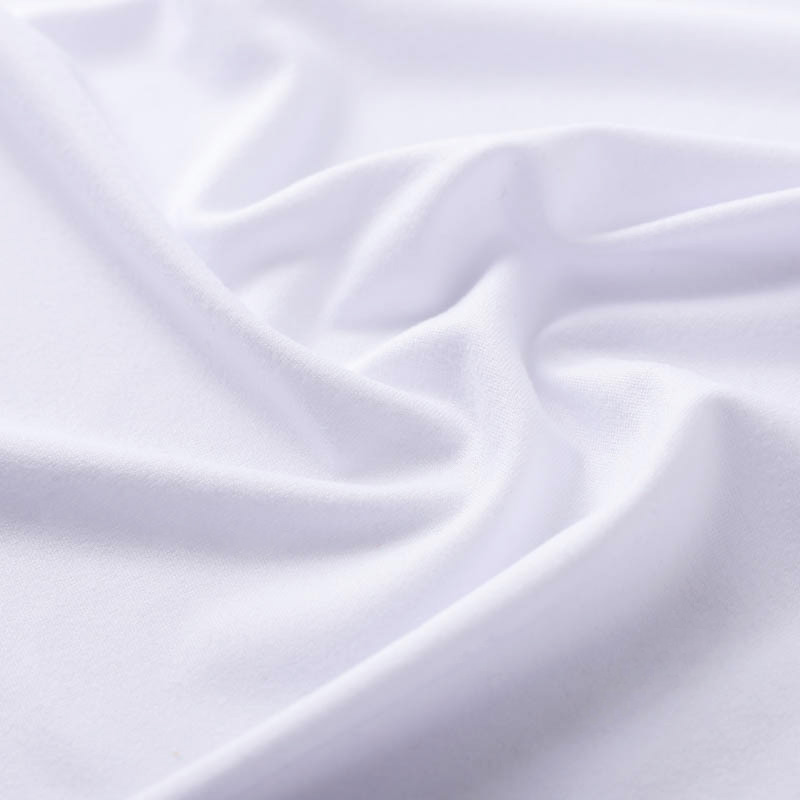
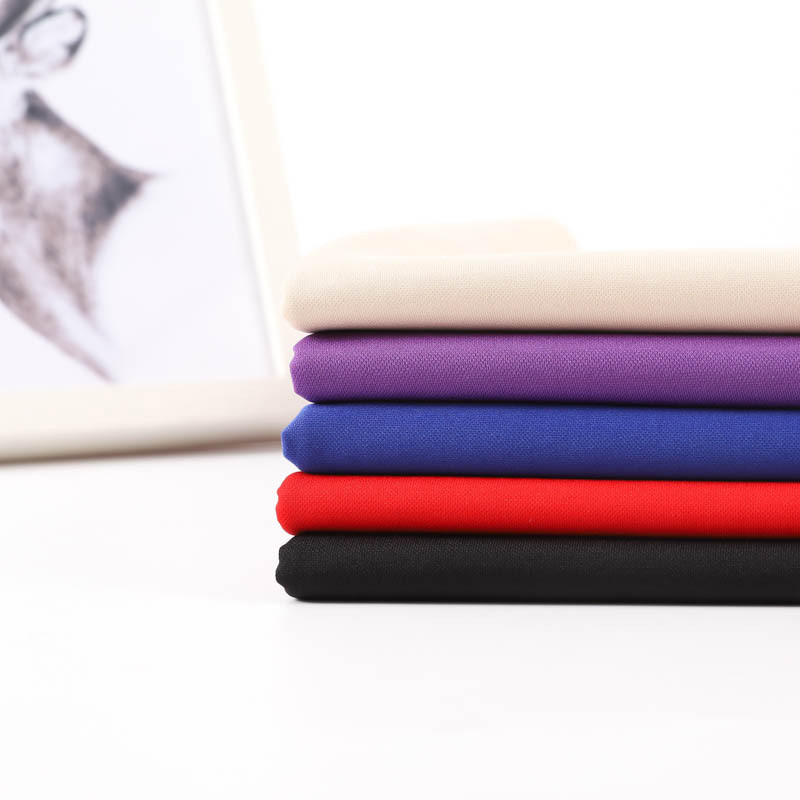
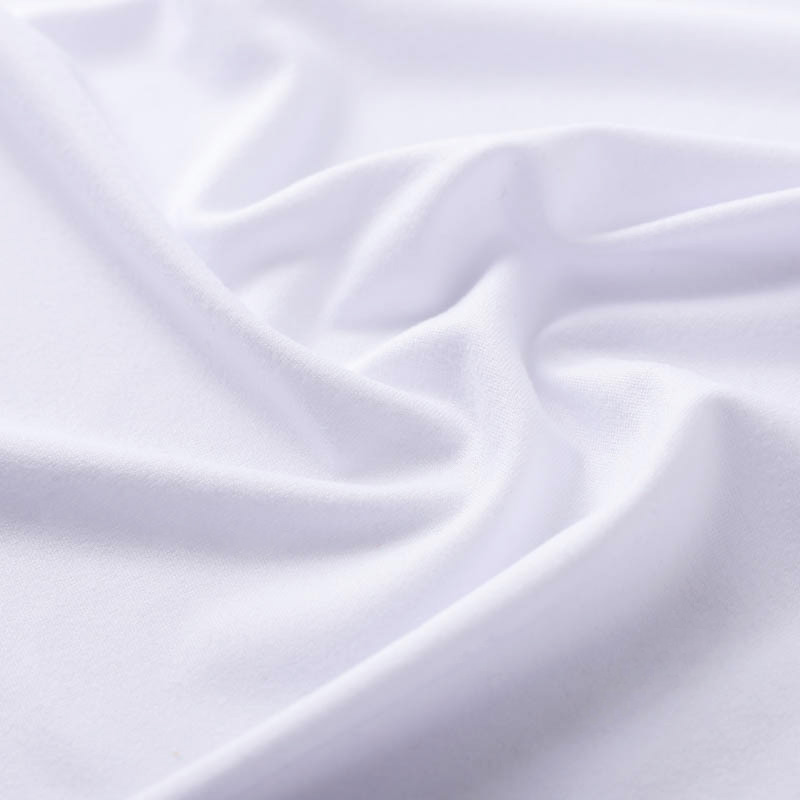 Double-Sided Flat Woven Fabric with Smooth Finish and Balanced WeightAvailable in 75D, 50D, and 100D weights, this double-sided flat cloth stays presentable from either face, suiting reversible cushions and decorative panels. Its smooth texture, moisture absorption, and anti-pilling behavior fit the upholstery and drapery uses described nearby.View Product →
Outdoor and technical uses
Tightly woven polyester and nylon plain weaves carry the load in tent flysheets, awnings, and packs, where ripstop grids stop small tears from spreading. Because the weave itself can be made dense, these fabrics block wind while staying light; coatings add water protection on top of the structure rather than instead of it.
How Flat Woven Fabric Is Made
On the woven route, yarns are prepared and wound onto warp beams, then interlaced on air-jet, rapier, or water-jet looms running hundreds of picks per minute. Dyeing and finishing follow: singeing burns away surface fibers, calendering presses the cloth smooth, and coatings or resin finishes tune the hand and performance for the end use.
On the knit route — the one behind most catalog "flat woven" listings from knitting mills — large-diameter circular machines convert fine polyester yarns such as 50D, 75D, and 100D into single- or double-faced flat-surface cloth, followed by heat setting, brushing, or compaction. Shaoxing Yihan Textile, a knit fabric mill founded in 2016 in Shaoxing, Zhejiang Province, runs more than 100 double-sided and 80 single-sided large circular machines in 34-inch and 38-inch cylinders at 24, 28, and 32 gauge, supplying flat-surface knits for school uniforms, yoga wear, outdoor lines, and garment linings. Asking a supplier which route they actually run — loom or knitting frame — tells you what to expect from stretch, recovery, and seams before samples arrive.
A Sourcing Checklist Before You Order
Before approving a bulk order, put the following points in writing with your supplier:
- Construction: confirm woven or knitted with a four-way pull and an edge check on the actual swatch.
- Full specification: fiber content, yarn count (for example, 75D polyester), GSM, width, and weave or knit density.
- Shrinkage tolerance: agree a range — 3% to 5% is a common commercial window — and the test method behind it.
- Colorfastness: set minimum grades for light, washing, and rubbing; grade 4 or above on ISO scales is a typical target for garments washed repeatedly.
- Pilling resistance: critical for linings and any garment that sees abrasion.
- Sealed sample: approve a physical standard and tie bulk inspection to it, since hand feel and surface smoothness are hard to define on paper.
- Commercial terms: confirm MOQ, lead time, and port access, because repeat and replacement orders move faster from well-connected mills.
The expensive mistakes are all avoidable: assuming two fabrics sharing a trade name share a construction, skipping the shrinkage clause, or cutting a fitted pattern from a cloth whose only give is on the bias. Comparing a supplier's actual range side by side makes these checks concrete, and a source mill's flat woven fabric lineup is a practical starting point.
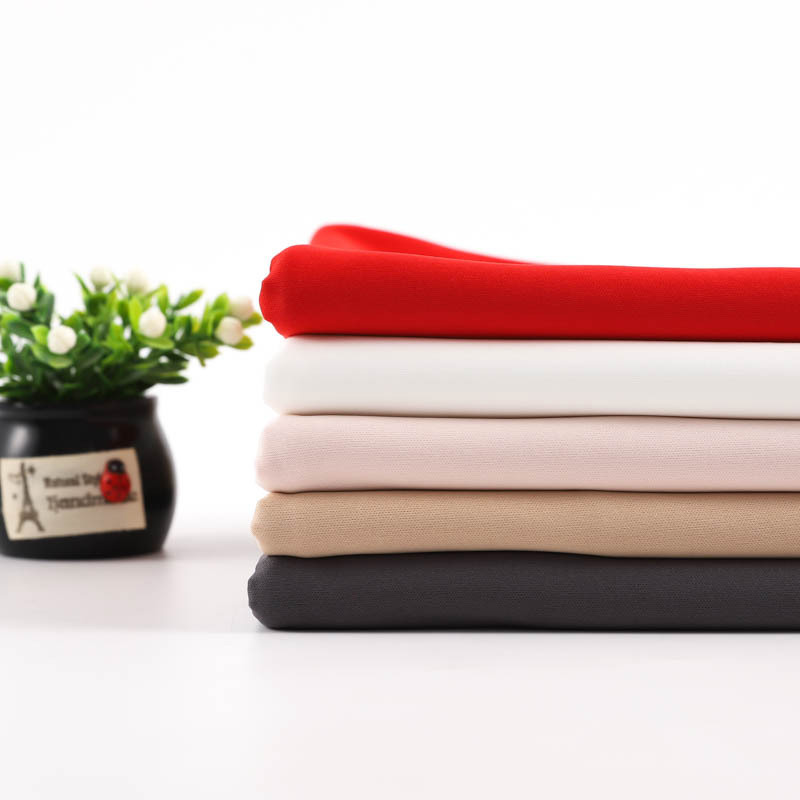
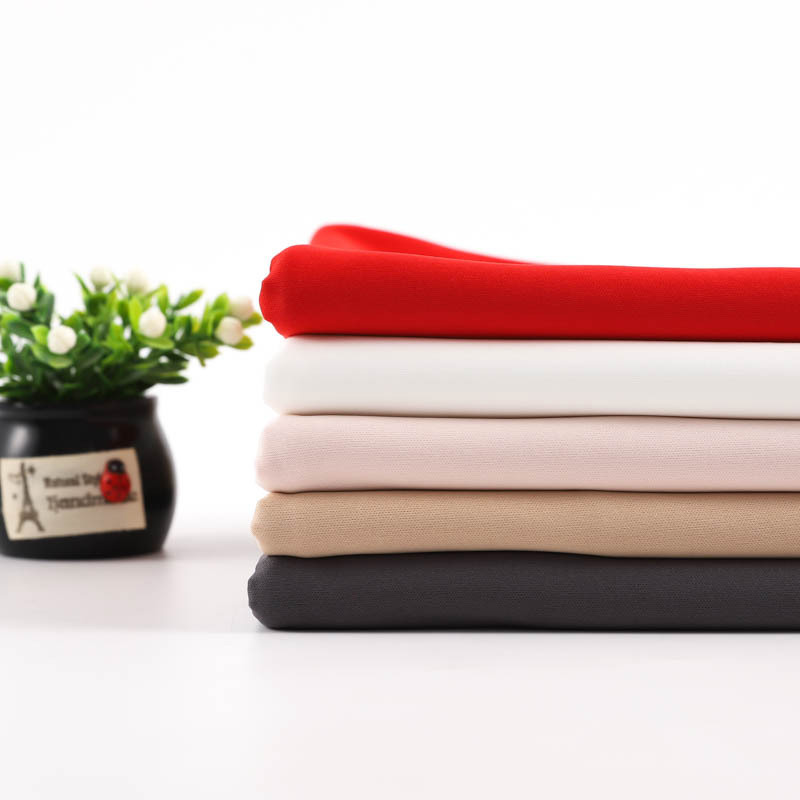
Durable Flat Woven Fabric for Apparel and Home UseA tightly interlaced warp-and-weft construction gives this flat woven fabric dimensional stability, clean printing, and long wear. It suits buyers comparing supplier ranges, matching the surrounding advice on choosing between woven stability and knit comfort before bulk orders.View Product →Flat woven fabric earns its place in nearly every fabric program because it does the unglamorous work well: it holds dimensions, prints cleanly, presses sharply, and wears hard. Choose the construction to match the end use — woven when stability leads, knit when comfort and stretch lead — then put the specifications, tests, and tolerances in writing before the bulk order. Those two habits prevent most of the problems that buyers later blame on the fabric itself.