English
  中文简体
中文简体 Choose Your Image Transfer Method Before You Touch the Fabric
Suppose you have a black-and-white line drawing for a cotton tote, a full-color photo for a cushion cover, or a repeating logo that must appear identically across five hundred garment panels. Each situation calls for a different technique. The first decision is not which transfer paper to buy; it is how many pieces you need, what the fabric is made of, and how many wash cycles the finished item must survive.
For a one-off craft project, iron-on transfer paper or a printable fabric sheet can deliver a finished surface in under an hour. For a production run, transfer jacquard fabric is the stronger option because the image is built into the knitted loops rather than laid on top of the fabric. The table below summarizes the main routes and their limitations.
| Method | Best for | Watch out for |
|---|---|---|
| Iron-on transfer paper | Single shirts, bags, and cushions | Mirror-image setup; film can crack after repeated washing |
| Printable fabric sheets | Full-color photos on cotton or cotton blends | Needs heat setting and edge protection |
| Inkjet freezer-paper method | Simple line art on light fabric | Printer feed can jam; fabric must stay perfectly flat |
| Sublimation printing | Polyester-based sports and activewear | Only works on light, synthetic, or polymer-coated surfaces |
| Transfer jacquard knitting | Repeating textured or multi-color patterns in volume | Higher development cost; not a quick DIY option |
DIY Image Transfer Methods That Actually Work
If you are making one item or a small batch, DIY methods are simple and inexpensive. The final quality depends on the printer, the transfer medium, and the heat-setting step.
Iron-On Transfer Paper
Print your image in mirror mode unless the paper is designed for light-colored fabric and orientation is irrelevant. Cut away the excess paper around the design, place the transfer image side down on the fabric, and press with a hot, dry iron for the time stated on the packaging, usually 20 to 30 seconds. Allow the paper to cool before peeling. For dark fabric, use a transfer film made for dark colors; standard light-fabric paper will leave a visible edge.
Freezer Paper Through an Inkjet Printer
Freezer paper lets you feed lightweight fabric through a normal inkjet printer. Iron the shiny side of the freezer paper to the back of the fabric, trim it to letter or A4 size, and load it so the print lands on the fabric face. This method works well for simple shapes, line art, and high-contrast images. Hand wash gently or use a fabric color-setting step before the first wash.
Printable Fabric Sheets for Full-Color Photos
Printable fabric sheets are pre-coated cotton or cotton-blend sheets that run through an inkjet printer. They provide the smoothest reproduction of a photo on a home machine. Let the ink dry completely, then set it with a warm iron following the sheet instructions. Because the image sits on the surface, reserve this method for items that will not face heavy abrasion or frequent washing.
When a Transfer Is Not Enough: Transfer Jacquard Fabric
DIY transfers are perfect for prototypes and personal gifts, but they share a structural limitation: the image is an applied layer. Once that layer cracks, fades, or peels, the design is gone. Industrial knitted jacquard solves that problem differently. In a transfer jacquard fabric, loops are moved between needles during knitting, so the pattern, texture, and relief are formed inside the fabric. The image is not glued or printed on; it is part of the cloth itself.
The phrase “transfer jacquard fabric” is sometimes confusing because “transfer” is used in two different ways. In home crafting, a transfer is a printed sheet that is ironed onto fabric. In textile production, transfer jacquard is a knitted construction in which stitches are transferred from one needle to another to create pattern and relief. If you are sourcing fabric, confirm which you actually need: a surface-printable base cloth or an already-structured jacquard fabric.
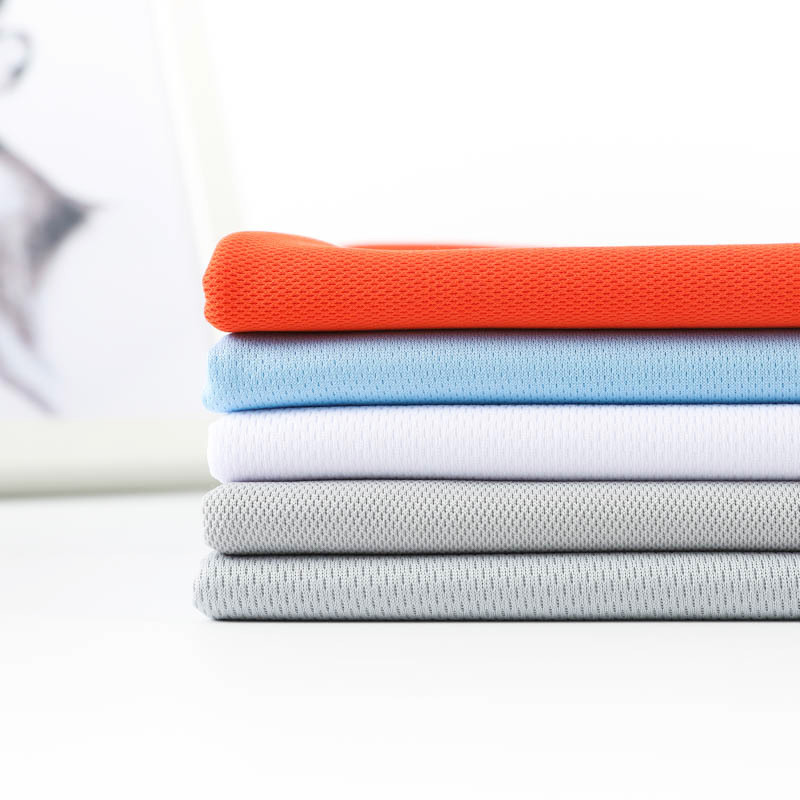
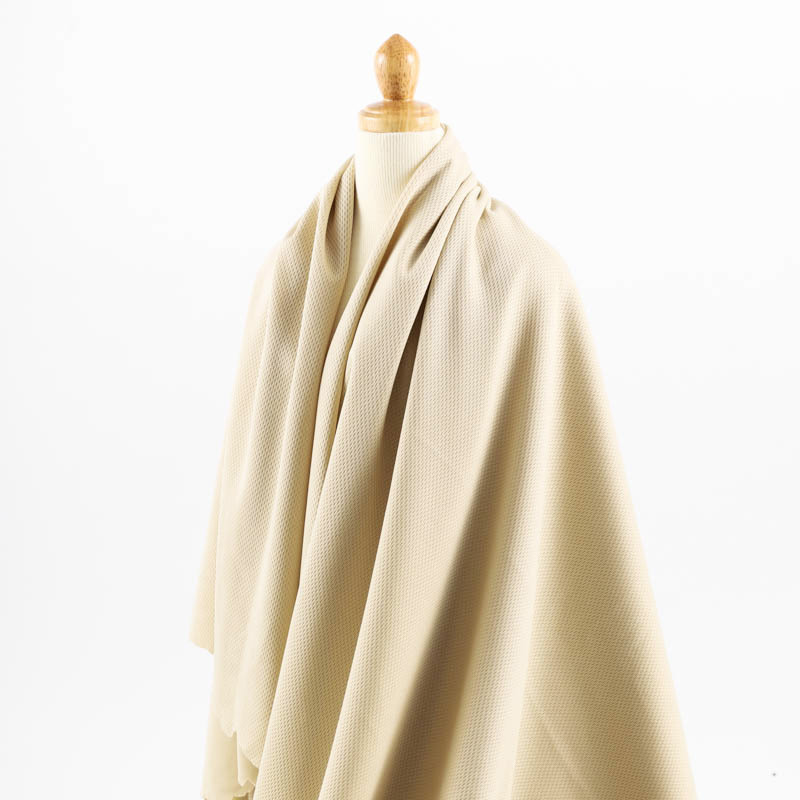
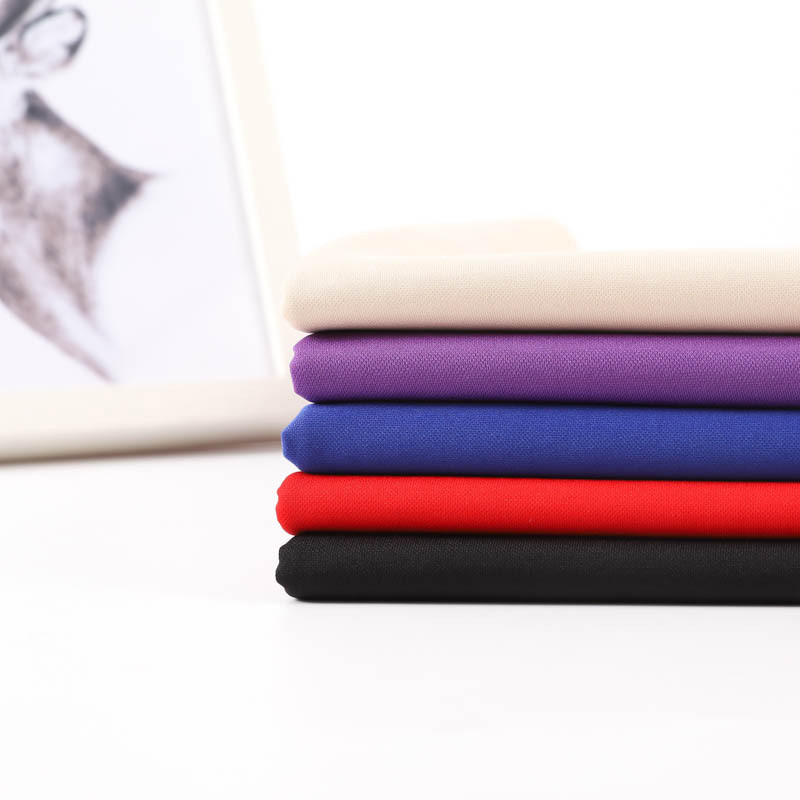
This matters for brands and factories that need the same logo or motif to survive dozens of industrial washes, repeated stretching, and everyday abrasion. Transfer jacquard can create hollow, convex, and raised effects while keeping the fabric flexible and breathable. For example, our hollow convex transfer jacquard fabric gives cushions and garments a structural pattern that does not flatten after washing. When the design requires thickness on both sides, a thick double-faced jacquard fabric provides a heavier, reversible option for outerwear and upholstery.
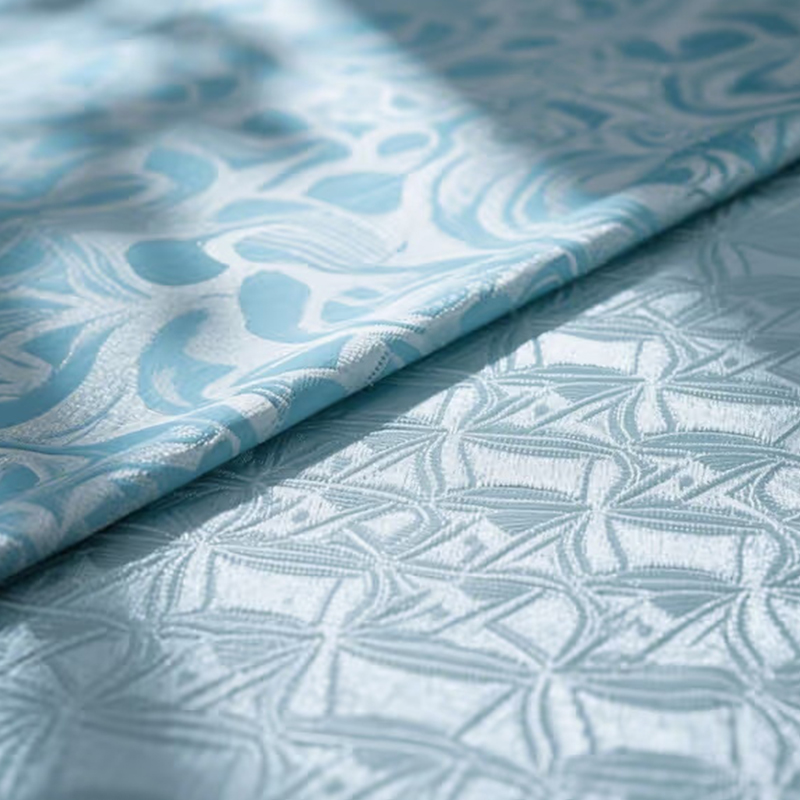 Wholesale Thick double-faced jacquard fabric Suppliers, Factory - Shaoxing YihanShaoxing Yihan Textile Co., Ltd. is China wholesale Thick double-faced jacquard fabric suppliers and factory,Double Jacquard Fabric is a ...View Product →
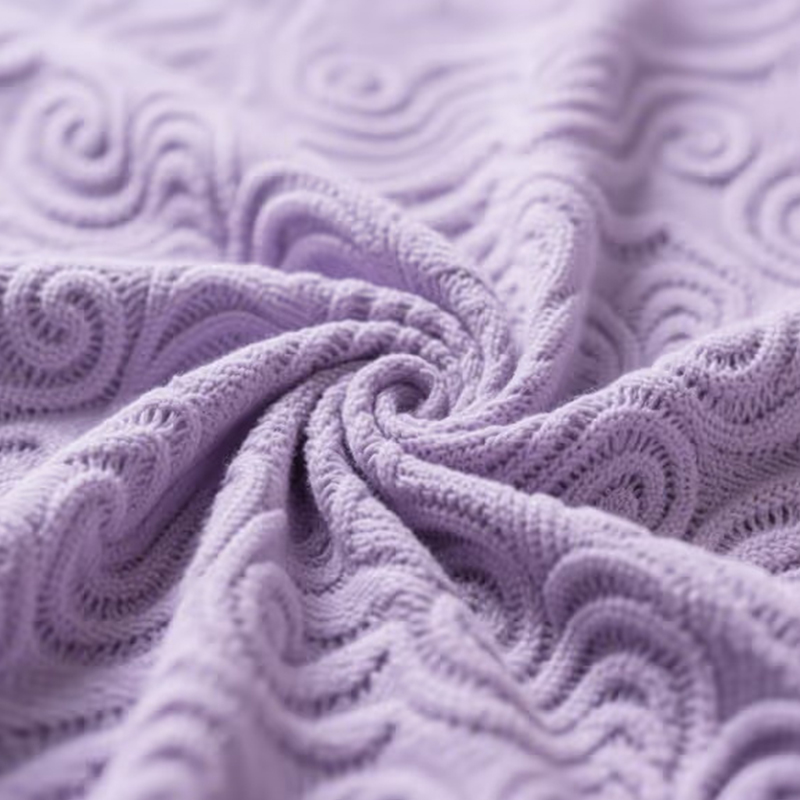 Wholesale Hollow convex transfer jacquard fabric Suppliers, Factory - Shaoxing YShaoxing Yihan Textile Co., Ltd. is China wholesale Hollow convex transfer jacquard fabric suppliers and factory,Transfer Jacquard Fabric...View Product →
If you are evaluating whether jacquard construction suits your project, it helps to review the engineering principles behind jacquard fabric before committing to a development order.
Printed Transfer or Transfer Jacquard: Production Decisions
The choice between printed transfer and transfer jacquard usually comes down to four factors: order quantity, design complexity, fabric hand feel, and wash resistance.
- Order quantity: printed transfer is low-cost for small batches; jacquard has higher development and sampling cost, but every metre after that is repeatable and predictable.
- Color count: full-color photographic images need a print process; jacquard performs best with limited palettes and structured motifs.
- Hand feel: printed transfers can stiffen the surface; transfer jacquard maintains a soft, three-dimensional texture.
- Longevity: woven jacquard patterns outlast printed transfers because there is no surface layer to lose adhesion.
Because jacquard is a fabric structure rather than a print process, it also affects thickness, stretch, and drape. That is why you should know what to check before buying jacquard fabric when translating a design into a knitted production. A mill with experience in both standard knitted fabrics and jacquard can advise on stitch density, yarn count, and repeat size before you commit to bulk.
Practical Tips for Clean, Long-Lasting Image Transfer
Regardless of the method you choose, these steps reduce failed transfers and early wear.
- Prewash and iron the fabric so sizing, shrinkage, and wrinkles do not distort the design.
- Test on a scrap of the same fabric first. Heat, pressure, and wash performance vary among cotton, polyester, and blends.
- For iron-on transfers, use a hard, heat-resistant surface and even pressure; a pressing cloth prevents scorching.
- Wash finished pieces inside out in cold water and avoid chlorine bleach. Air drying is gentler than a hot dryer.
- For jacquard production, order a sample in the actual yarn colors and stitch densities. A photo cannot show hand feel or relief depth.
Start with the end use. A one-off photo gift needs a paper-based method you can finish at home. A product line with a repeatable logo, a textured surface, or a long wash-life requirement needs an industrial solution such as transfer jacquard fabric. Match the method to the volume, and the result will look as if the image was part of the material all along—because in jacquard, it is.