English
 中文简体
Knit fabrics are everywhere you look — in T-shirts, hoodies, yoga leggings, school uniforms, even furniture covers. Yet when most buyers ask how knit fabrics are produced, the process can feel like a black box. Yarn goes in, rolls of fabric come out, and somehow a flat strand becomes a soft, stretchy textile.
As a knit fabric manufacturer with our own circular knitting mill, we live inside that process every day. This guide walks you through production stage by stage — from raw yarn to finished fabric — so you know what really happens on the factory floor, what drives quality, and what to look for when you source from a supplier.
What Makes a Fabric Knitted?
Before we talk about production steps, it helps to understand how knitting works at the most basic level. Knitting builds fabric by pulling loops of yarn through previous loops, row after row. One continuous yarn becomes an interconnected web of stitches, and that loop structure is what gives knit fabrics their stretch, recovery, and soft drape.
Woven fabrics take a different path: two sets of yarns cross each other at right angles, creating a stable but less elastic sheet. Knits are built to move and conform, which is why activewear, underlayers, and casual garments all lean so heavily on knitted textiles. If you are new to the category, our knit fabric overview covers the main fabric families in more detail.
Step 1: Raw Materials and Yarn Preparation
Every roll of knit fabric starts with yarn. The fiber you choose determines the fabric's feel, durability, care requirements, and price. At our mill, most production is built around polyester — textured, fully drawn, or recycled — often blended with spandex for stretch. Cotton, nylon, and other fibers join the mix depending on the end use, from school uniforms to outdoor jackets.
Fiber fineness is measured in denier (D), and it makes a big difference in the finished fabric:
- 50D yarns produce fine, lightweight fabric — common for summer tops, linings, and next-to-skin garments.
- 75D yarns sit in a versatile middle range, used across daily wear, sportswear, and school uniforms.
- 100D and 150D yarns knit up heavier, more durable fabrics for outerwear and performance clothing.
Yarn quality matters just as much as yarn count. If a yarn has inconsistent thickness, too many breaks, or surface defects, those problems will appear in the finished fabric. That is why a responsible mill checks incoming yarn carefully before it ever reaches the knitting floor.
Step 2: The Knitting Process
Once yarn passes inspection, it moves to the knitting floor. The workhorse of modern knit fabric production — especially for apparel — is the circular knitting machine. Needles are arranged in a circle around a cylinder, and the machine knits continuously in a tube. Depending on the machine's construction, it can produce an extraordinary range of structures.
Single Jersey Machines
A single jersey machine uses one set of needles and knits fabric with a distinct face and back. It produces light, breathable fabrics like jersey, single pique, and single-sided flat cloth — the kinds of textiles used for T-shirts, dresses, and casual tops. Gauge, or the number of needles per inch, controls how fine or coarse the fabric feels. Our single jersey line covers gauges from 24 to 32 needles per inch with 34-inch and 38-inch cylinder diameters, giving us flexibility from fine knits to more substantial textures.
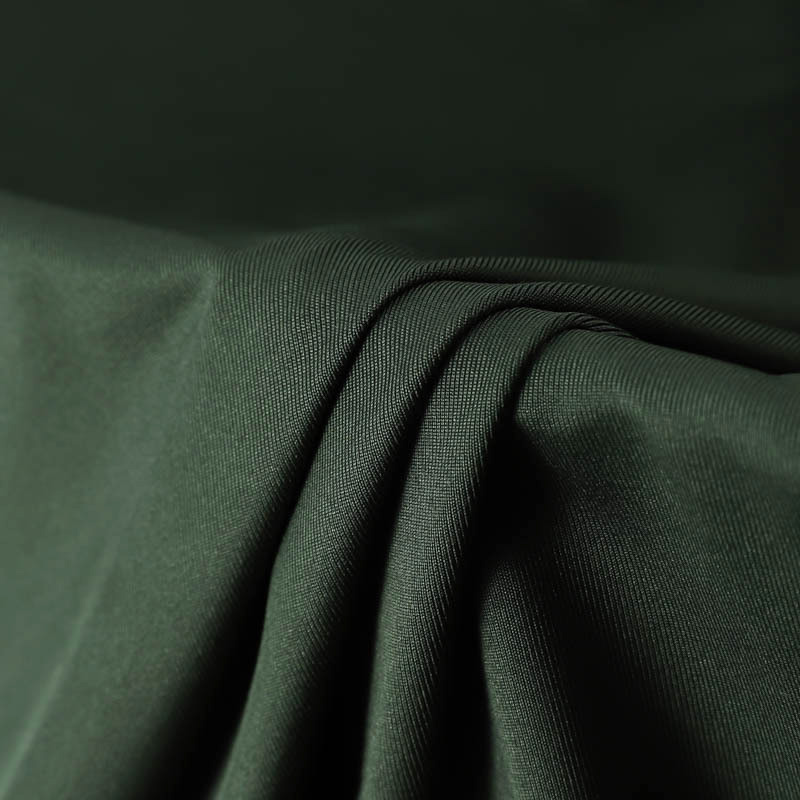
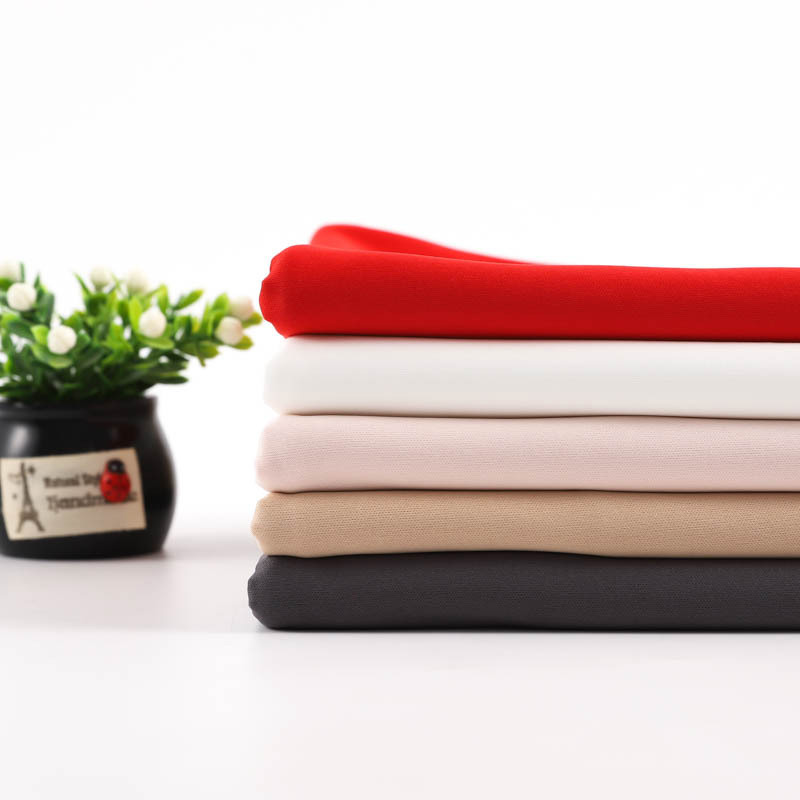 50D Polyester Single-Sided Flat Knit FabricThis lightweight, breathable polyester jersey suits summer wear and sportswear. Its moisture-wicking and durable properties fit the single jersey machines described above.View Product →
Double Jersey Machines
Double jersey machines use two sets of needles — cylinder and dial — so both sides of the fabric are knitted at the same time. That opens up a much larger toolbox: rib, interlock, fleece, air layer, and many double-faced structures. Because the two sides can be knitted independently, double jersey fabrics are often thicker, more stable, and more versatile than their single jersey counterparts. This is where heavier winter fabrics, structured sportswear knits, and technical materials come from.
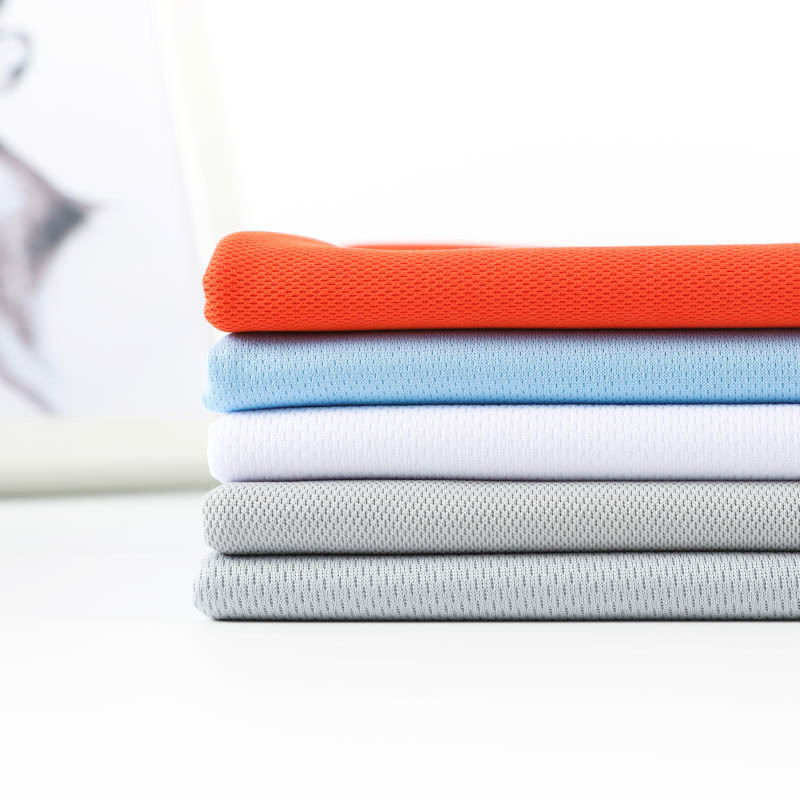
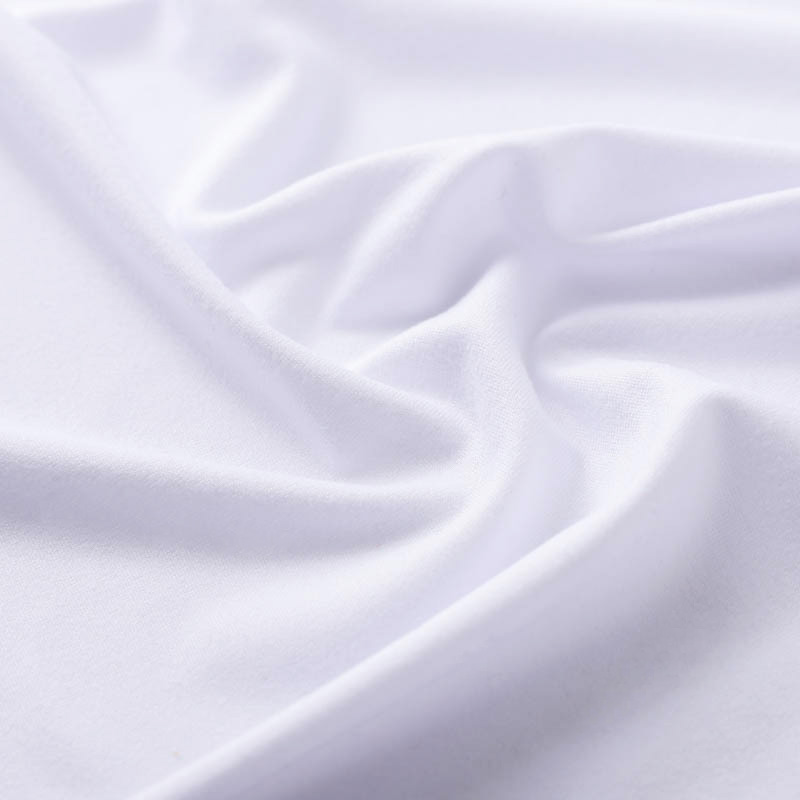 100D Milk Silk Double-Sided Furry Flat ClothA thicker, double-faced knit with soft feel and enhanced durability, ideal for structured garments. It demonstrates the versatility of double jersey machine production.View Product →
The real craft happens in the machine setup. Two mills can start with identical yarn and still produce completely different fabric — one crisp and papery, another plush and soft. Needle selection, cam angles, yarn feeding tensions, and take-down speed all change the hand feel, weight, and performance of the final product.
How Structure Choice Shapes Fabric Performance
Different stitch patterns create very different performance profiles, and choosing the right structure is a big part of fabric development.
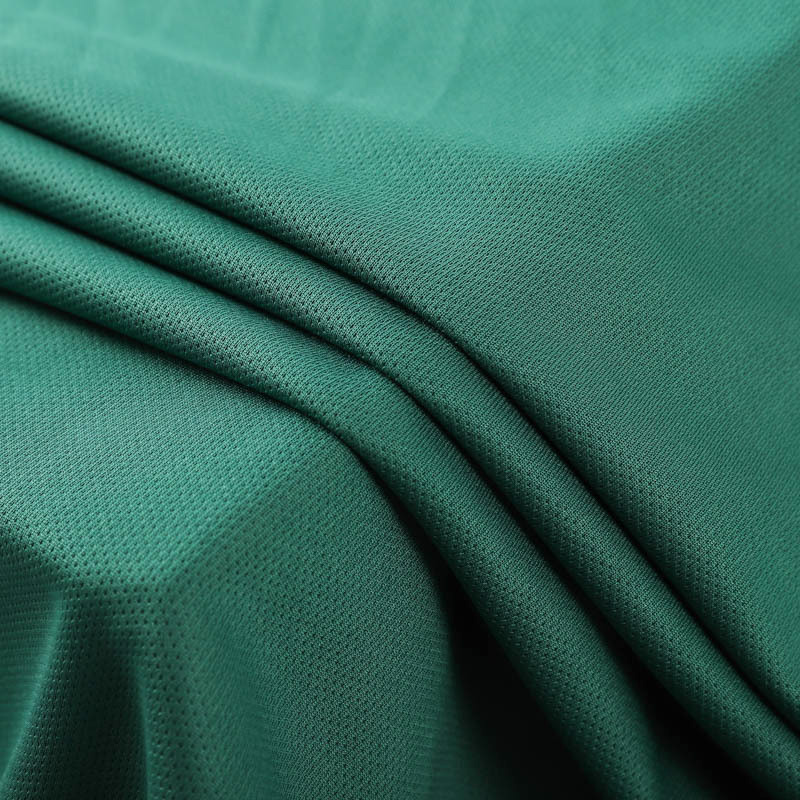
A birdseye mesh, for instance, uses a repeating knit-and-tuck pattern to create an open, honeycomb-like surface. Air circulates freely, so the fabric feels cool and dries quickly — a natural fit for sportswear, quick-dry garments, and breathable linings.
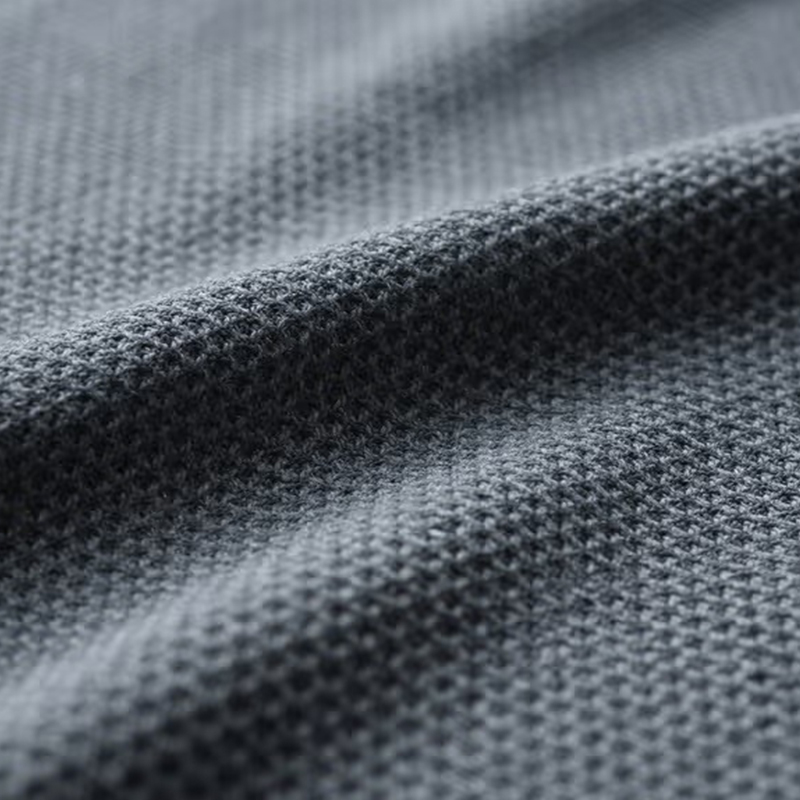 Polyester Elastic Interwoven Birdseye FabricThis breathable, quick-drying fabric with tiny holes is built for sports and hot weather, showing how knit patterns like birdseye deliver performance benefits.View Product →
Air layer fabrics take the opposite approach. The double structure creates a hollow middle layer that traps still air, delivering warmth without the bulk of a heavy knit. That is why air layer fabric shows up in winter jackets, hoodies, and school uniforms. Similarly, rib knits offer excellent vertical stretch and recovery, while jacquard structures allow almost any pattern to be knitted directly into the fabric. The structure decision is not just aesthetic — it determines breathability, insulation, elasticity, and durability.
Step 3: Dyeing and Finishing
Fresh off the knitting machine, the fabric is called grey or greige fabric. It looks dull, feels stiff, and carries spinning and knitting oils from the machinery. Dyeing and finishing transform it into the colorful, soft, functional textile that garment makers can actually use.
A typical finishing flow looks like this:
- Scouring and washing to remove impurities and oils.
- Dyeing to achieve the target color, using equipment suited to the fiber type.
- Heat-setting to stabilize dimensions and lock the structure.
- Softening and special treatments such as anti-pilling, water repellency, or moisture-wicking finishes.
- Final drying and rolling, ready for inspection.
Each step has a direct impact on the fabric you feel in your hand. Poor scouring leaves the fabric stiff; careless heat-setting causes shrinkage problems; a rushed softening step makes the finish uneven. Consistency in finishing is one of the biggest differences between a professional mill and a workshop.
Quality Control: What We Test and Why
Quality control is not a single inspection at the end of the line. In a mature mill, it happens at every stage — yarn on arrival, fabric during knitting, and finished rolls after finishing. The most common checks include:
| Test | What It Verifies | Typical Standard |
|---|---|---|
| Color fastness | Resistance to fading under light, washing, and rubbing | Grade 4–5 |
| Dimensional stability | Shrinkage after repeated washing and drying | Within 3% |
| Pilling resistance | Surface durability against abrasion | Grade 3–4 |
| Strength | Tensile and tear resistance under stress | Depends on end use |
These tests are not just paperwork. They predict how a fabric will behave after ten washes, after a season of wear, or under the stress of garment production. For a buyer, asking which tests a mill runs — and seeing the results — tells you more than any sample swatch.
Why Working with a Vertical Mill Matters
Understanding how knit fabrics are produced is one thing; finding a partner that executes every step well is another. At Shaoxing Yihan Textile, we control production from yarn selection through knitting, dyeing, and finishing in our own facility. Our floor runs more than 100 double jersey machines and 80 single jersey machines, with cylinder diameters from 34 to 38 inches and gauges from 24 to 32 needles per inch. That combination lets us handle everything from fine single jersey for linings to thick air layers for winter wear.
Because we are the factory, communication is direct. You talk to the people who actually make the fabric, not a trading office that relays messages. We keep over 100 stock samples ready for quick evaluation, and we develop custom fabrics from your sketches or references. If you want to see how the production steps we described translate into real textiles, feel free to explore our knit fabric product range.
The next time you pick up a T-shirt, a pair of yoga leggings, or a winter hoodie, you will know a little more about the journey it took. Every roll is the result of careful yarn selection, machine setup, and finishing decisions made by people who understand the craft. If you are sourcing knit fabrics for your own products, those are the same details worth asking your supplier about — because they are exactly what determine the quality you receive.