English
  中文简体
中文简体 The two types of knitted fabrics are weft knit and warp knit. Weft knitting forms loops horizontally across the fabric width using one continuous yarn, while warp knitting forms loops vertically along the fabric length using multiple yarns simultaneously. These two construction methods produce fabrics with fundamentally different stretch characteristics, stability, appearance, and end uses—from everyday T-shirts to technical sportswear and medical textiles. Understanding the difference helps designers, manufacturers, and buyers make better material decisions.
Weft Knitting: The Most Common Knit Construction
Weft knitting is the construction most people recognize when they think of knitted fabric. In this method, a single yarn (or a small number of yarns) runs horizontally—course by course—across the width of the fabric, with each loop interlocking through the loop of the previous row. This is essentially the same principle used in hand knitting, scaled up to industrial machinery.
Weft knit machines include flat-bed knitting machines (which produce open-width fabric or shaped panels) and circular knitting machines (which produce a continuous tube of fabric). Circular knitting is the dominant method for mass-production of jersey fabrics, with machines running at speeds of up to 1.5 million stitches per minute on modern high-speed equipment.
Key Characteristics of Weft Knit Fabric
- High stretch in all directions: Weft knit fabrics typically stretch 25–50% in width and have significant lengthwise stretch, making them ideal for close-fitting garments.
- Soft hand feel: The looped structure traps air, creating a soft, cushioned texture that is comfortable against the skin.
- Prone to unraveling (laddering): Because loops are interconnected in one direction, a broken yarn can cause a run or ladder—a significant limitation in fine-gauge fabrics.
- Good drape and recovery: Weft knits recover well from deformation, returning to their original shape after stretching.
- Lower dimensional stability: Compared to warp knits or woven fabrics, weft knits are more susceptible to distortion during cutting and sewing.
Common Weft Knit Fabric Structures
Weft knitting produces several distinct fabric structures depending on the needle arrangement and stitch pattern used:
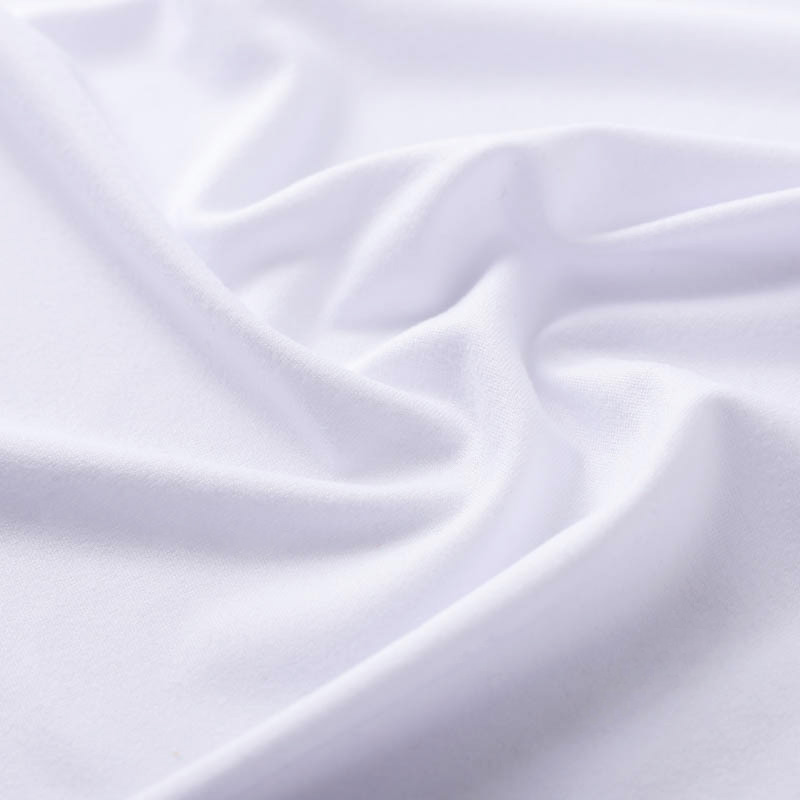
- Single Jersey: The simplest weft knit, produced on a single-bed machine. It has a smooth face side and a looped back, and is used in T-shirts, underwear, and casual tops. It curls at the edges when cut.
- Double Jersey (Interlock): Made on a double-bed machine, producing a stable, thicker fabric with the same appearance on both faces. Used in polo shirts, dresses, and quality knitwear. Less prone to curling and distortion.
- Rib Knit: Alternating knit and purl stitches create vertical ribs with excellent crosswise stretch and strong recovery. Commonly used for cuffs, collars, waistbands, and form-fitting garments.
- Purl Knit: Loops are drawn in alternating directions, creating a fabric that looks the same on both sides. Used in baby clothing and reversible garments.
- Terry and Velour: Loop pile variants used in towels, bathrobes, and athletic wear. Terry retains the loop pile; velour has the loops sheared to create a soft, velvety surface.
Warp Knitting: The Stable, Technical Knit Structure
Warp knitting is structurally different from weft knitting in its fundamental loop formation. In warp knitting, a separate yarn is used for each wale (vertical column of loops), and all loops in a course are formed simultaneously. The yarns run lengthwise (in the warp direction) and are deflected sideways to interlock with adjacent yarns, creating a diagonal interlocking structure.
Warp knitting requires specialized machinery—primarily raschel machines and tricot machines—which are considerably more complex and expensive than weft knitting equipment. However, they produce fabric at very high speeds: modern tricot machines can produce up to 6 meters of fabric per minute, making them highly efficient for technical and commodity production.
Key Characteristics of Warp Knit Fabric
- High dimensional stability: Warp knits are significantly more stable than weft knits, resisting distortion during cutting, sewing, and use. They do not unravel or ladder when a yarn breaks.
- Limited stretch in the lengthwise direction: Most warp knits have moderate to low lengthwise stretch but retain some crosswise stretch, making them suitable for applications requiring controlled elasticity.
- Run-resistant: Because each yarn interlocks with its neighbors in multiple directions, warp knit fabrics do not run or unravel when cut or damaged—a key advantage in technical applications.
- Smooth, flat surface: Warp knits—especially tricot—have a fine, smooth surface suitable for lingerie, linings, and activewear.
- Less elasticity than weft knits: Unless elastomeric yarns (like spandex/Lycra) are incorporated, warp knits are less stretchy than comparable weft knit structures.
Common Warp Knit Fabric Structures
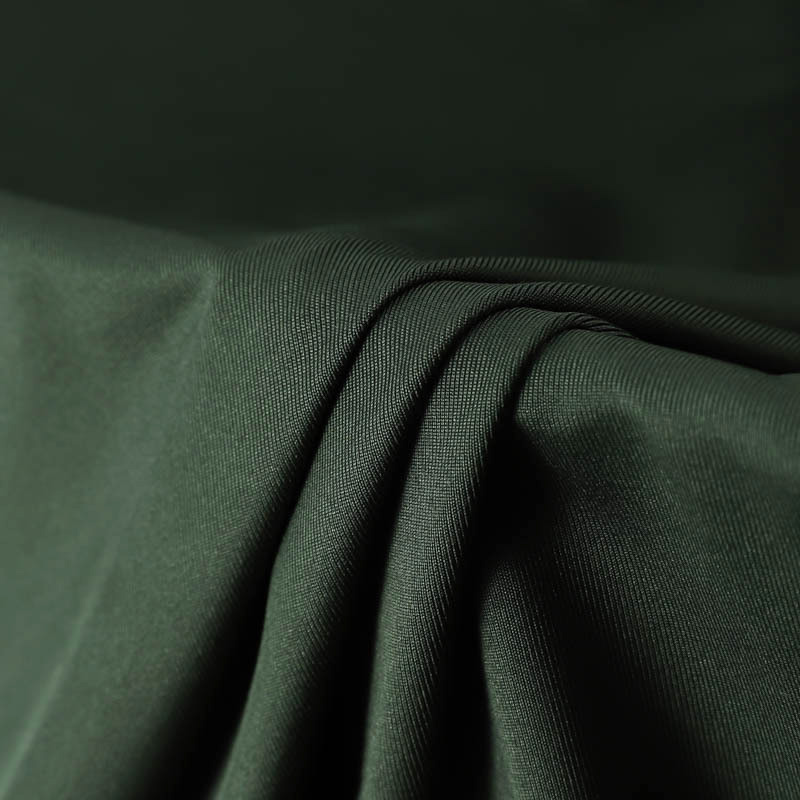
- Tricot: The most widely produced warp knit, made on a tricot machine using fine filament yarns. It produces a smooth, fine-ribbed fabric used in lingerie, swimwear linings, sportswear, and automotive interiors. It resists runs and has a characteristic fine lengthwise rib on the technical face.
- Raschel Lace: Raschel machines can produce open, complex lace-like structures with decorative patterns. Widely used in lingerie, bridal wear, and fashion trims.
- Powernet: An open-mesh warp knit with elastomeric yarns incorporated. Used in foundation garments, shapewear, and medical compression garments due to its controlled stretch and recovery.
- Spacer Fabric: A three-dimensional warp knit with two outer fabric layers connected by a spacer yarn layer. Used in mattresses, shoe uppers, protective pads, and medical seating for its cushioning and air permeability.
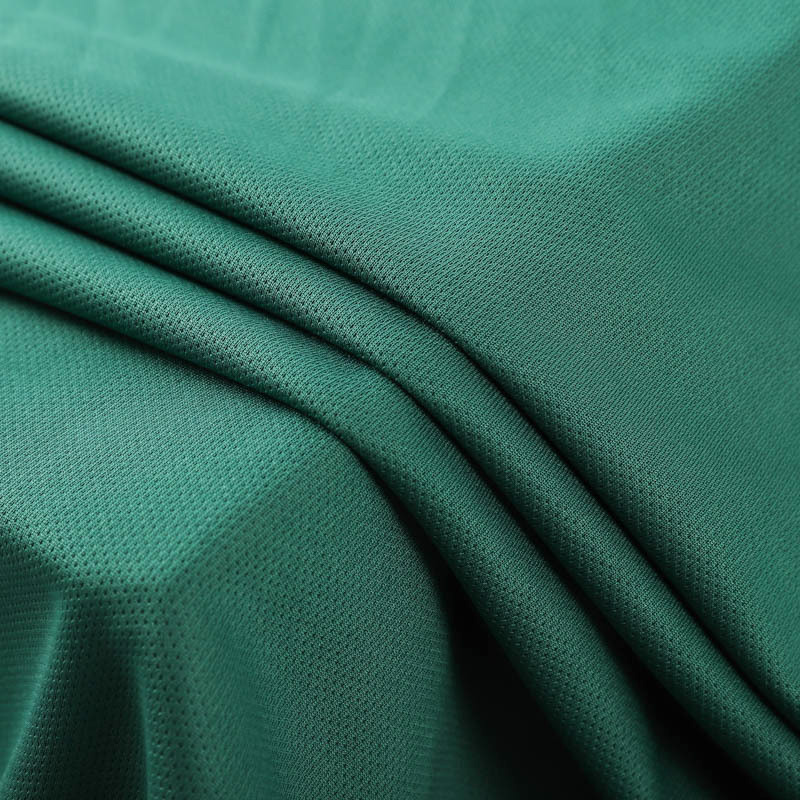
- Net and Mesh: Open-structure warp knits used in sports jerseys, bags, packaging, and industrial filtration.
Side-by-Side Comparison: Weft Knit vs. Warp Knit
The table below summarizes the most important differences between the two knit types across key performance and production factors.
| Property | Weft Knit | Warp Knit |
|---|---|---|
| Loop Direction | Horizontal (course-wise) | Vertical (wale-wise) |
| Yarns Used | One (or few) | Many (one per wale) |
| Stretch | High (all directions) | Moderate (mainly crosswise) |
| Dimensional Stability | Lower | Higher |
| Run/Ladder Resistance | Low (prone to laddering) | High (run-resistant) |
| Fabric Hand | Soft, bulky | Smooth, flat |
| Machine Complexity | Simpler, lower cost | Complex, higher cost |
| Design Flexibility | High (color, texture patterns) | Moderate to high (lace, mesh) |
| Typical End Uses | T-shirts, knitwear, socks, jersey | Lingerie, sportswear, lace, medical |
How Yarn Choice Affects Knit Fabric Performance
Both weft and warp knit fabrics can be produced from virtually any fiber—natural or synthetic—but yarn type significantly influences the final fabric's behavior. This is especially important when selecting fabrics for specific performance requirements.
- Cotton yarns in weft knits (e.g., jersey T-shirts) produce soft, breathable fabrics that absorb moisture but may shrink up to 5–8% after the first wash if not pre-shrunk.
- Polyester filament yarns dominate warp knitting for activewear and lingerie—they contribute to the smooth, low-friction surface of tricot fabric and add durability and wash stability.
- Elastomeric yarns (spandex/Lycra) can be incorporated into both knit types to dramatically increase stretch and recovery. Even 5–10% spandex content in a weft jersey fabric can transform its fit and recovery properties, making it suitable for athletic and compression applications.
- Nylon yarns in warp knit powernets and swim fabrics provide strength, abrasion resistance, and excellent color retention under UV exposure—critical for swimwear that must withstand chlorine and sunlight.
- Wool and wool-blend yarns in weft-knitted sweaters provide natural insulation and moisture management but require more careful laundering than synthetic counterparts.
Industry Applications: Where Each Knit Type Is Used
The global knitted fabric market is dominated by weft knitting in terms of volume—weft knit fabrics account for approximately 70–75% of all knitted fabric production—largely due to the dominance of jersey-based apparel (T-shirts, underwear, casual wear). Warp knitting holds a smaller but highly specialized market share, concentrated in technical and intimate apparel sectors.
Weft Knit Applications
- Casual and fashion apparel: T-shirts, sweatshirts, leggings, casual dresses.
- Outerwear and knitwear: Sweaters, cardigans, scarves, hats, and gloves (both machine and hand-knit styles).
- Socks and hosiery: Fully fashioned on circular machines using specialized gauge equipment.
- Baby and childrenswear: Soft jersey and interlock fabrics for comfort and ease of movement.
- Athletic performance wear: Moisture-wicking polyester jerseys, compression shorts, and base layers.
Warp Knit Applications
- Lingerie and intimate apparel: Tricot and raschel lace for bras, briefs, and bodysuits.
- Swimwear: Tricot and powernet fabrics with nylon and spandex for shape retention and chlorine resistance.
- Medical textiles: Compression bandages, hernia mesh, and vascular grafts—where dimensional stability and run-resistance are critical.
- Automotive and technical interiors: Seat cover fabrics, headliner materials, and airbag components.
- Geotextiles and industrial nets: Raschel-knit nets for erosion control, cargo containment, and agriculture shade cloth.
Choosing Between Weft and Warp Knit for Your Application
The decision between weft and warp knit fabric should be guided by the specific requirements of the end product. Use the following criteria as a practical guide:
- If maximum stretch and softness are priorities (casual tops, underwear, knitwear, socks), choose weft knit. It offers the best all-around stretch, comfort, and design versatility at lower production cost.
- If dimensional stability and run-resistance are required (lingerie, swimwear, medical, automotive), choose warp knit. Its structure resists distortion and damage far better than weft knit.
- If an open or lace structure is needed (fashion trim, bridal lace, industrial nets), warp knitting—particularly raschel—is the only knitting method capable of producing these structures efficiently.
- If three-dimensional or spacer structures are required (cushioning, protective pads, shoe uppers), warp knitting's spacer fabric capability is unique and not achievable with weft knitting.
- If production cost and simplicity are the main constraints, weft knitting has lower equipment costs and simpler yarn setup, making it more accessible for smaller manufacturers and custom production runs.