English
  中文简体
中文简体 Dyeing polyester fabric requires disperse dyes and high heat — standard fiber-reactive or acid dyes simply won't bond to polyester's synthetic polymer chains. Whether you're working with a flat woven polyester or a technical knit like Polyester Birdseye Mesh Fabric, the core chemistry is the same: you need dyes that can penetrate the tightly packed polyester molecules, and that penetration only happens reliably at temperatures above 130°C (266°F). Below, you'll find a complete, practical guide covering methods, materials, step-by-step instructions, and tips specific to mesh constructions.
Why Polyester Is Notoriously Difficult to Dye
Polyester (polyethylene terephthalate, or PET) is a hydrophobic, semi-crystalline synthetic fiber. Unlike cotton or wool, it has no ionic sites or hydroxyl groups for dye molecules to attach to. The fiber repels water and most water-soluble dyes. Its tight molecular structure means dye molecules can only enter when the polymer chains are thermally expanded — which is why heat is non-negotiable.
Common mistakes include using Rit All-Purpose dye (designed for natural fibers), dyeing below 100°C, or skipping a carrier chemical. These result in washed-out, uneven color that fades after the first wash.
- Cotton dyes (fiber-reactive): 0% uptake on polyester
- Acid dyes (for wool/nylon): minimal uptake, poor wash fastness
- Disperse dyes at 130°C: up to 85–95% exhaustion rate depending on shade depth
The Only Dye Class That Works: Disperse Dyes
Disperse dyes are non-ionic, water-insoluble colorants that exist as fine particles suspended in water. At high temperatures, these particles sublimate into the swollen polymer chains of polyester and become physically trapped upon cooling. This mechanism — called solid-solution dyeing — is what gives polyester its excellent wash and light fastness when done correctly.
Popular Disperse Dye Products
- Rit DyeMore for Synthetics — consumer-friendly, widely available, works at ~93°C (200°F) on the stovetop
- iDye Poly — produces vibrant results, includes a color intensifier packet
- Jacquard Disperse Dyes — professional-grade, suitable for heat-transfer (sublimation) printing as well
- Industrial disperse dye powder (e.g., Disperse Red 60, Disperse Blue 56) — used in professional textile facilities with HT jet dyeing machines
Dyeing Methods Compared: Which Is Right for You?
Three main methods are available depending on your equipment, scale, and the specific fabric construction — including open-structure fabrics like Polyester Birdseye Mesh.
| Method | Temperature | Best For | Color Depth | Equipment Needed |
|---|---|---|---|---|
| Stovetop / Immersion | 90–100°C | Small yardage, DIY projects | Light to medium | Stainless pot, thermometer |
| HT (High-Temperature) Jet Dyeing | 130–135°C | Industrial production, deep shades | Deep, excellent fastness | Pressurized HT jet machine |
| Sublimation / Heat Transfer | 180–210°C (dry heat) | Patterned or printed designs | Photo-quality prints | Heat press, sublimation printer |
For home use with Polyester Birdseye Mesh Fabric, the stovetop immersion method with Rit DyeMore or iDye Poly gives the best balance of accessibility and color quality. Industrial settings almost exclusively use HT jet dyeing at 130°C for consistent, deep results across large fabric runs.
Step-by-Step: Stovetop Dyeing for Polyester Birdseye Mesh Fabric
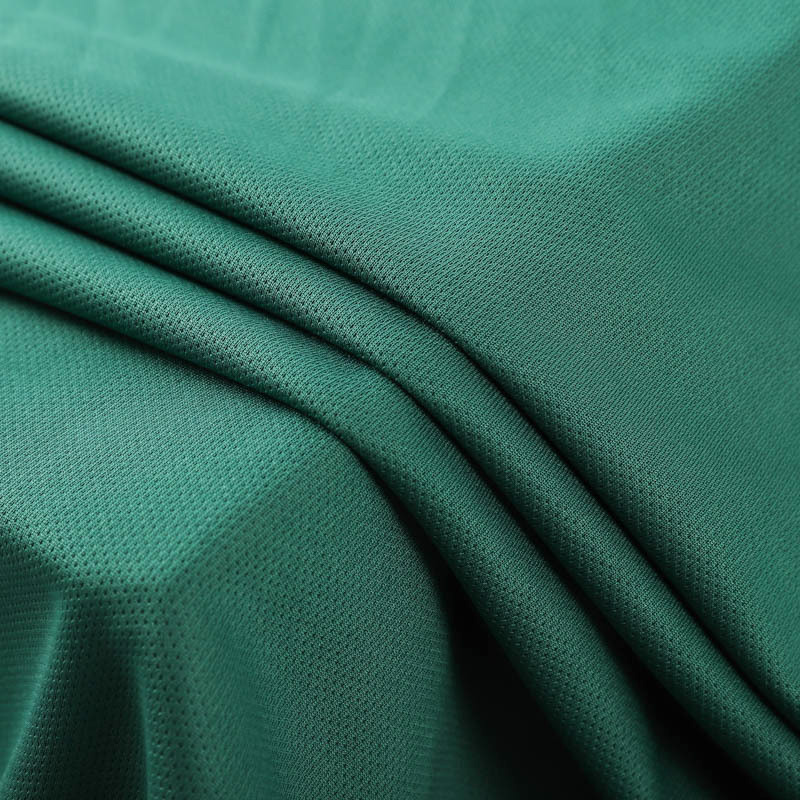
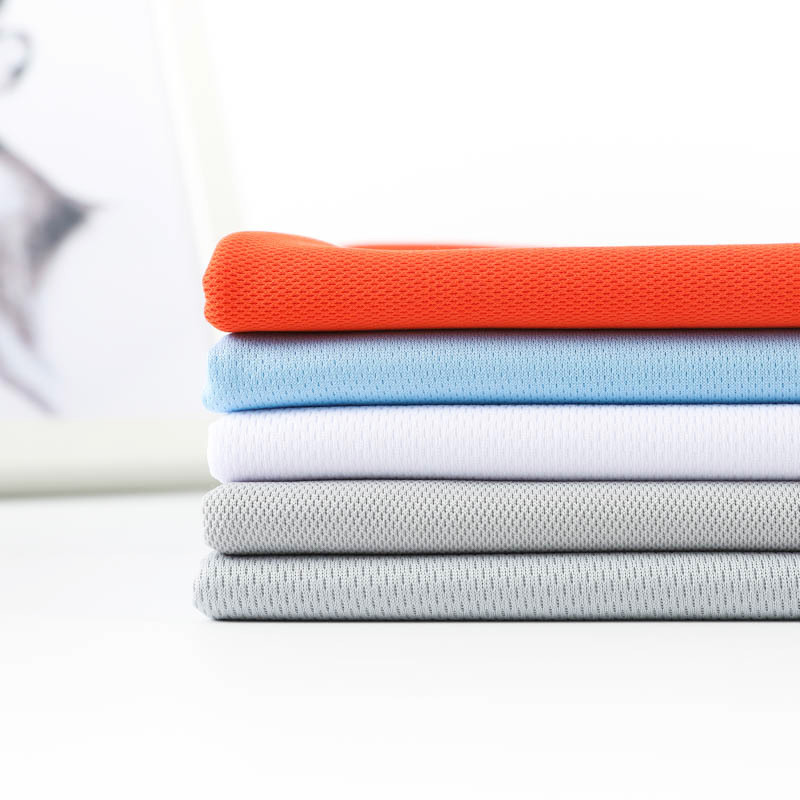
Polyester Birdseye Mesh is a knit fabric with a small, uniform hole pattern — commonly used in athletic jerseys, activewear linings, and moisture-wicking garments. Its open structure means dye liquor circulates easily, but it also means the fabric can tangle or snag. Follow these steps carefully.
Materials You'll Need
- Polyester Birdseye Mesh Fabric (pre-washed)
- Disperse dye (e.g., Rit DyeMore or iDye Poly)
- Large stainless steel pot (do not use aluminum — it reacts with dye auxiliaries)
- Candy or digital thermometer
- Dish soap or a non-ionic surfactant (wetting agent)
- Long stainless steel or wooden stirring rod
- Rubber gloves and a dedicated dyeing apron
- Distilled water (optional but reduces mineral interference)
The Process
- Pre-wash the fabric — run the mesh through a hot wash with dish soap to remove any finishing agents, oils, or sizing that would block dye penetration. Sizing is commonly applied to polyester mesh in manufacturing and can cause severe uneven dyeing if not removed.
- Fill the pot — use enough water to allow the fabric to move freely. A general ratio is 3 gallons of water per 1 lb (450g) of dry fabric. More water means more even coverage but lighter color.
- Add dye and heat — dissolve the dye in a cup of hot water first, then add to the pot. Add 1 tsp of dish soap as a leveling agent. Heat to 88–95°C (190–200°F) and maintain this range throughout the dye cycle.
- Wet the fabric — thoroughly wet out the mesh in warm water before adding it to the dye bath. Dry fabric dropped into hot dye creates streaks and uneven spots immediately.
- Dye for 30–60 minutes — stir continuously for the first 10 minutes, then every 2–3 minutes thereafter. Constant agitation is critical for even results on Birdseye Mesh because the open structure can create dye pooling in the holes if the fabric sits still.
- Rinse thoroughly — rinse in progressively cooler water until the water runs clear. Avoid a sudden cold rinse from very hot, as this can shock and distort mesh knit structures.
- Final wash — machine wash in warm water with a small amount of detergent to remove surface dye. Tumble dry on low or air dry flat to preserve the mesh structure.
Achieving Deeper Colors: Dye Concentration and Carrier Chemicals
At stovetop temperatures (below 100°C), color uptake on polyester is limited. To achieve medium to dark shades without industrial equipment, two strategies are commonly used:
1. Increase Dye Concentration
Professional dyeing uses a measure called %owf (percent on weight of fiber). A light shade requires 0.5–1% owf; a dark navy or black may need 6–10% owf. At home, doubling the amount of dye listed on the package and extending the dye time to 60 minutes will noticeably deepen the color. However, adding more dye beyond the saturation point yields diminishing returns — excess unfixed dye is simply rinsed out.
2. Use a Dye Carrier
Carrier chemicals (such as benzyl alcohol, methyl naphthalene, or the proprietary carrier in iDye Poly's color intensifier packet) swell the polyester fiber at lower temperatures, mimicking the effect of high-temperature dyeing. Adding a carrier at stovetop temperatures can improve dye uptake by 30–50% compared to no carrier. Use with adequate ventilation, as many carriers have strong odors.
Special Considerations for Polyester Birdseye Mesh Fabric
Birdseye Mesh isn't just any polyester — its knit construction, open holes, and typical use in performance athletic wear create unique dyeing challenges:
- Moisture-wicking finishes: Many athletic polyester mesh fabrics have a durable moisture-management treatment applied at the mill. These finishes can resist dye penetration significantly. A pre-scour (pre-wash in hot water with soda ash or strong dish soap) at 70°C for 20 minutes before dyeing is recommended to partially remove these treatments.
- Blended fabrics: Some Birdseye Mesh is a polyester/spandex blend (e.g., 90% polyester / 10% elastane). The spandex content will not accept disperse dye and may slightly affect evenness. Dyeing at temperatures above 120°C can also degrade spandex elasticity, so stay below 100°C for stretch fabrics.
- Color limitations: Polyester cannot be bleached effectively, and the base fabric color affects the final result. White or light grey polyester mesh produces the truest colors. Dark base colors cannot be lightened before overdyeing.
- Mesh hole distortion: Excessive agitation in a too-small pot can cause the knit structure to pill or the holes to stretch. Always use a large enough vessel so the fabric moves freely.
Sublimation Dyeing: The Professional Method for Patterned Mesh
For custom prints, team jerseys, or detailed graphics on Polyester Birdseye Mesh, sublimation (heat-transfer) dyeing is the industry standard. This process uses a heat press to transfer disperse dye from printed paper directly into the polyester fibers at 180–210°C. The dye sublimates (converts directly from solid to gas) and permanently bonds within seconds.
Key facts about sublimation on Birdseye Mesh:
- Only works on white or very light-colored polyester — the sublimation process does not have a white ink, so the base fabric provides highlights.
- Requires at least 65% polyester content for visible, vibrant results; lower polyester content yields faded, washed-out prints.
- The open mesh structure means the transfer paper must be pressed with a silicone pad or foam backing to maintain even pressure across the holes.
- Wash fastness rating of 4–5 on the ISO 105-C06 scale — among the best of any dyeing method.
Wash Fastness and Aftercare: Keeping Dyed Polyester Mesh Vibrant
Properly dyed polyester with disperse dyes has excellent wash fastness — typically rated 4–5 out of 5 on standard ISO wash fastness tests. However, improper dyeing or aftercare can cause premature fading.
| Care Step | Recommendation | What to Avoid |
|---|---|---|
| Washing | Cold to warm water (30–40°C), gentle cycle | Hot wash cycles (60°C+), harsh detergents |
| Drying | Air dry flat or low tumble dry | High heat dryer, direct prolonged sunlight |
| Ironing | Low synthetic setting with press cloth | Direct high-heat ironing (melts/distorts mesh) |
| Detergent | Mild liquid detergent, color-safe formula | Optical brighteners, chlorine bleach |
Chlorine bleach is particularly destructive — it breaks down disperse dye molecules irreversibly, causing rapid color loss. Optical brighteners in detergents can also cause color shift over time on dyed synthetics.
Troubleshooting Common Dyeing Problems
Even experienced dyers encounter issues with polyester. Here are the most common problems and their causes:
- Color too light or washed out: Temperature was insufficient, dye concentration too low, or finishing agents on the fabric were not removed. Solution: Re-scour and re-dye with higher dye concentration and a carrier chemical.
- Uneven or streaky color: Fabric was not wetted before dyeing, not stirred enough, or the pot was overcrowded. Solution: Always wet-out fabric first; use a pot with at least 3× the fabric volume in water.
- Color fading after first wash: Surface dye was not rinsed out, or the dye was not properly fixed (too short a dye time or too low temperature). Solution: After dyeing, wash in warm water with a drop of dish soap for 10 minutes to strip unfixed surface dye.
- Color bleeding onto other fabrics: Underfixing or insufficient rinsing. Solution: Wash dyed polyester separately for the first 2–3 washes. Add a dye-catching sheet (e.g., Shout Color Catcher) as a precaution.
- Mesh holes deformed or pilled: Excessive agitation in a too-small pot, or fabric tangled around the stirring rod. Solution: Use a large pot, fold fabric loosely before adding, and use a gentle folding stir rather than vigorous swirling.
Can You Tie-Dye or Shibori Polyester Birdseye Mesh?
Yes — but with limitations. Traditional tie-dye uses fiber-reactive dyes that don't work on polyester. However, disperse dye tie-dye is possible on polyester using one of two techniques:
- Immersion tie-dye: Bind and resist the mesh as usual, then immerse in a hot disperse dye bath. The resist areas absorb some dye due to the heat (unlike cold-process fiber-reactive tie-dye), so results are softer with less contrast — typically 20–40% less contrast than cotton tie-dye.
- Sublimation shibori: Fold and bind the mesh, place it between sublimation-printed transfer paper, and press. This produces very sharp pattern contrasts because the dye only transfers where paper contacts the fabric.
For Birdseye Mesh specifically, shibori-style folding works better than tight rubber-band binding, which can permanently distort the open knit structure under heat.