English
  中文简体
中文简体 How Stretchy Is Polyester? The Direct Answer
Standard polyester fabric has minimal natural stretch — typically 10% to 15% elongation before returning to its original shape. Unlike spandex or elastane, polyester is a synthetic fiber with a rigid molecular structure, which means it holds its form well but does not stretch significantly on its own. However, the actual stretchiness of any polyester product depends heavily on the weave, knit construction, and whether stretch fibers have been blended into the fabric.
For example, a tightly woven polyester twill may stretch as little as 5%, while a polyester jersey knit can stretch 50% or more. Polyester Birdseye Mesh Fabric — a common performance and athletic textile — sits in the moderate range, typically offering 15% to 30% stretch depending on the knit tension and yarn weight.
Understanding Polyester Fabric Structure and Stretch
Polyester is a petroleum-derived synthetic fiber composed of polyethylene terephthalate (PET). Its linear polymer chains are strong and resistant to deformation, which is why the fabric excels in durability and shape retention. These same properties, however, limit natural elasticity.
Woven vs. Knit Polyester
The construction method is the single biggest factor in determining stretch:
- Woven polyester (e.g., taffeta, twill, satin): Interlocked horizontal and vertical threads allow very little give — usually under 10% stretch in either direction.
- Knit polyester (e.g., jersey, interlock, mesh): Looped yarn construction naturally allows the fabric to expand and recover, offering 20%–60% stretch depending on loop tightness.
- Polyester-spandex blends: Adding just 5%–10% spandex or elastane can increase total stretch to 100% or more, commonly used in activewear and swimwear.
Stretch Direction: 2-Way vs. 4-Way
Polyester fabrics may stretch in one, two, or four directions:
- 2-way stretch: Stretches along one axis (typically the width), common in basic knit polyester.
- 4-way stretch: Stretches both horizontally and vertically, usually requires a spandex blend; preferred for activewear, yoga wear, and compression garments.
What Is Polyester Birdseye Mesh Fabric?
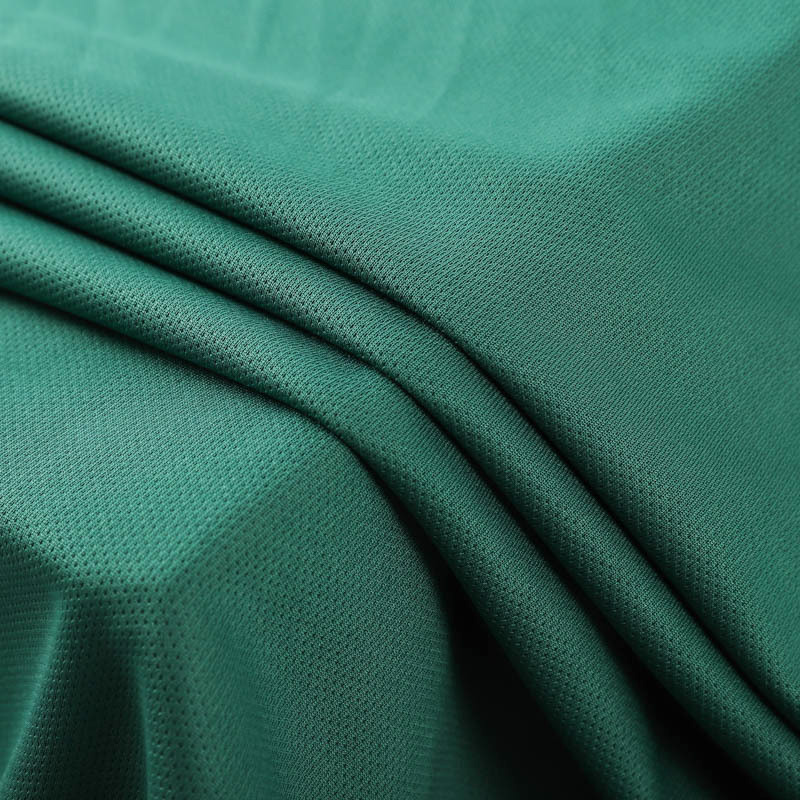
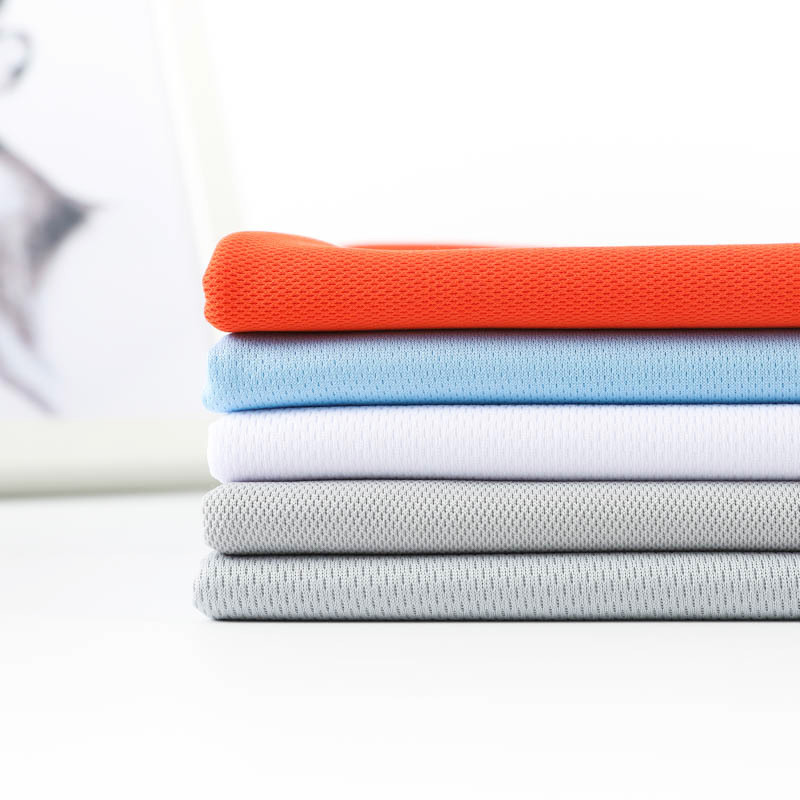
Polyester Birdseye Mesh Fabric is a knitted open-weave textile named for its distinctive small, uniform hole pattern that resembles a bird's eye when viewed closely. It is manufactured by knitting polyester yarns in a way that creates a consistent grid of tiny perforations throughout the fabric surface.
This fabric is widely used in:
- Athletic jerseys and team uniforms
- Basketball, football, and soccer apparel
- Sports shorts and training shirts
- Moisture-wicking undergarments and base layers
- Bag linings and lightweight outerwear panels
The open-cell structure makes it significantly lighter than solid polyester knit, and the air channels created by the mesh holes enhance breathability by up to 40% compared to standard polyester jersey, making it a preferred choice for high-performance athletic wear in warm conditions.
How Stretchy Is Polyester Birdseye Mesh Specifically?
Polyester Birdseye Mesh Fabric typically offers 15% to 30% horizontal stretch in its base form (100% polyester). The open knit structure gives it slightly more give than solid woven polyester, but less than a jersey or ribbed knit due to the tighter, more structured loop pattern that creates the birdseye effect.
When blended with elastane (commonly 5%–8% spandex), birdseye mesh stretch can increase to 60%–80% in two or four directions, making it far more accommodating for body movement during athletic activity.
| Fabric Type | Typical Stretch | Stretch Direction | Common Use |
|---|---|---|---|
| Woven Polyester | 5%–10% | Minimal / None | Shirts, linings, bags |
| Polyester Birdseye Mesh (100% polyester) | 15%–30% | 2-way | Jerseys, uniforms |
| Polyester Birdseye Mesh (with spandex) | 60%–80% | 4-way | Activewear, compression |
| Polyester Jersey Knit | 50%–60% | 2-way | T-shirts, sportswear |
| Polyester-Spandex Blend (activewear) | 100%+ | 4-way | Leggings, swimwear |
Key Properties of Polyester Birdseye Mesh Fabric Beyond Stretch
Stretch is just one dimension of performance. Polyester Birdseye Mesh offers a strong combination of functional attributes that make it a top choice across sportswear and uniform manufacturing:
Moisture Management
Polyester is inherently hydrophobic — it does not absorb water. In birdseye mesh form, sweat passes through the open holes and evaporates quickly from the skin surface. Many performance versions are treated with a moisture-wicking finish that actively pulls moisture away from the body, drying 3x to 5x faster than cotton equivalents.
Durability and Shape Retention
Polyester fibers resist pilling, stretching out permanently, and color fading. Birdseye mesh uniforms can typically withstand 50+ industrial wash cycles without significant degradation, which is a primary reason professional sports teams favor it for multi-season team kits.
Lightweight Construction
Standard Polyester Birdseye Mesh typically weighs between 100 gsm and 160 gsm (grams per square meter). This places it in the lightweight-to-medium category, comfortable for active use without adding bulk or restricting movement.
Sublimation Print Compatibility
Because it is 100% polyester (or near it), birdseye mesh is fully compatible with dye-sublimation printing — the process used for full-color, photo-quality team uniform graphics. Colors become part of the fiber, not just a surface coating, so they will not crack, peel, or fade the way screen-printed designs can.
Factors That Affect How Stretchy Your Polyester Fabric Will Be
If you are purchasing polyester fabric and stretch is important, here are the specific variables to evaluate:
- Fiber content: 100% polyester = low stretch; polyester + 5–10% spandex = moderate to high stretch; polyester + 20%+ spandex = maximum stretch.
- Knit structure: Looser knits stretch more. Tighter, denser knits like birdseye hold their structure better and stretch less.
- Yarn weight: Finer denier yarns (e.g., 75D) tend to produce more supple, slightly stretchier fabrics than heavier denier yarns (e.g., 300D).
- Finishing treatments: Some heat-setting treatments during manufacturing can reduce residual stretch. Always check the finished stretch specification, not just the fiber content.
- Fabric weight (gsm): Heavier fabrics generally stretch less due to more material mass per unit area resisting elongation.
Choosing the Right Polyester Fabric for Your Application
Different applications call for different levels of stretch. Here is a practical guide to matching fabric type to end use:
- Team jerseys and uniforms: Polyester Birdseye Mesh (100% polyester, 15%–25% stretch) is ideal — structured enough to hold sublimated graphics, light enough for comfort, breathable for play.
- Compression and fitted activewear: Opt for polyester-spandex blends (80/20 or 88/12) for 4-way stretch exceeding 80%.
- Casual sportswear and training shorts: Polyester jersey or birdseye mesh with a small spandex addition (5%–8%) offers a balance of comfort, shape retention, and moderate stretch.
- Bags, accessories, and non-stretch apparel: Woven polyester with minimal stretch provides the structure needed for these applications.
- Swimwear: Polyester-spandex with chlorine-resistant treatment is essential; standard birdseye mesh is not recommended for pool use without this treatment.
When ordering fabric by the yard or meter, always request a swatch test for stretch percentage — pull the fabric to 150% of its resting width and see if it recovers fully. Good-quality birdseye mesh will snap back without deforming. Poor recovery indicates either a low-quality knit or insufficient elastane content for your intended stretch level.
Care and Maintenance: Preserving Polyester Stretch Over Time
Even high-quality polyester fabric can lose its stretch and performance characteristics with improper care. Follow these guidelines to maintain fabric integrity:
- Wash in cold or warm water (30°C–40°C). High heat can cause polyester fibers to set in a deformed position, reducing elastic recovery.
- Avoid fabric softeners. These coat polyester fibers and can clog the micro-holes in mesh fabrics, reducing breathability by up to 20%.
- Do not wring or twist mesh fabrics. The open structure can deform permanently under torsional stress.
- Tumble dry on low or air dry. Excessive dryer heat degrades spandex content and reduces long-term stretch recovery.
- Store flat or loosely folded, not stretched over hangers, to prevent permanent elongation of the knit structure.
With proper care, high-quality Polyester Birdseye Mesh garments can maintain over 90% of their original stretch recovery after 100 or more wash cycles — a significant advantage over natural fibers like cotton, which break down far sooner under repeated washing.